The Merchant's Daughter

Issue #4 · 1943: Small Goods

1943

In 1943, the third year of the war for the Tan family and the second under Japanese rule in Syonan-to, Tan Cheng Huat finds a way to earn again without a firm. He buys and sells small goods, and takes a careful share in a scarce-goods trade he would once have refused. Lim Swee Neo sews and sells at home, and gets worrying news of a relative. Fever and hunger-sickness run through the neighbourhood and the household is spared. Their three-year-old daughter, Mei Lin, has a quiet year.

A work of fiction set in real history. The characters are invented; the historical events are real and sourced.

Previously, in 1942…

In 1942 Singapore falls and becomes Syonan-to, and the first year of the Occupation strips the Tan family of most of what it had. Tan Cheng Huat, the Malacca-born merchant, is held for days at a Sook Ching screening centre and released. Soldiers take the stock from his firm and trade stops. The Chinese community's $50 million levy is assessed against the household at about $36,000, and the Tans pay it by selling what they can. His wife, Lim Swee Neo, carries a worry of her own. Their two-year-old daughter, Mei Lin, knows only that her father is at home all day.
1943
Small Goods
Tan Mei Lin, 3
the child of the house
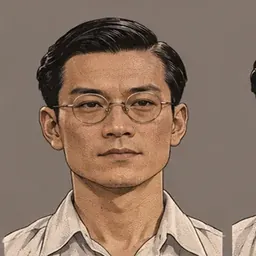
Tan Cheng Huat, 35
her father, a cloth merchant with nothing to sell
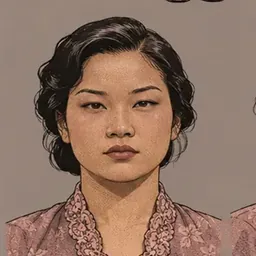
Lim Swee Neo, 28
her mother
1943 · page 1
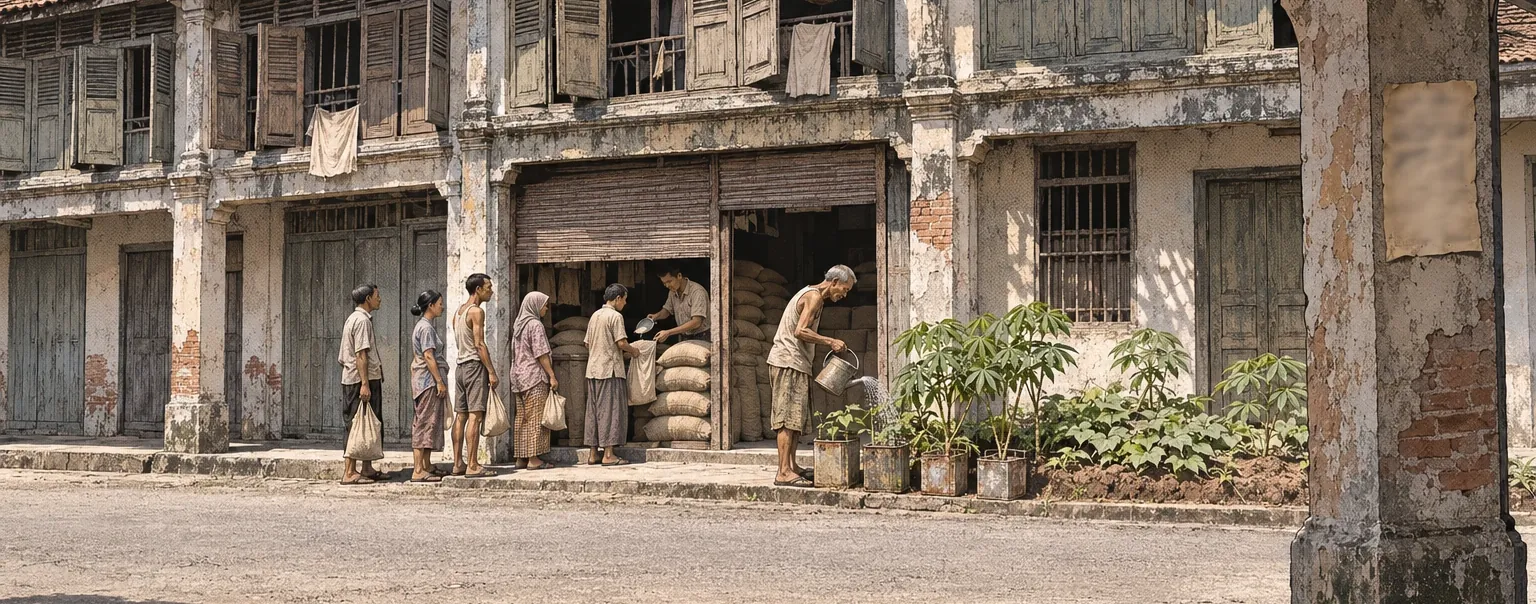
A shophouse street under the Japanese occupation: a short queue of thin residents with cloth bags waits at a rice shop's half-open shutter; in front of the houses, tapioca and sweet potato plants grow in old kerosene tins and in a dug-up strip of verge; a faded Japanese notice is pasted on a pillar.
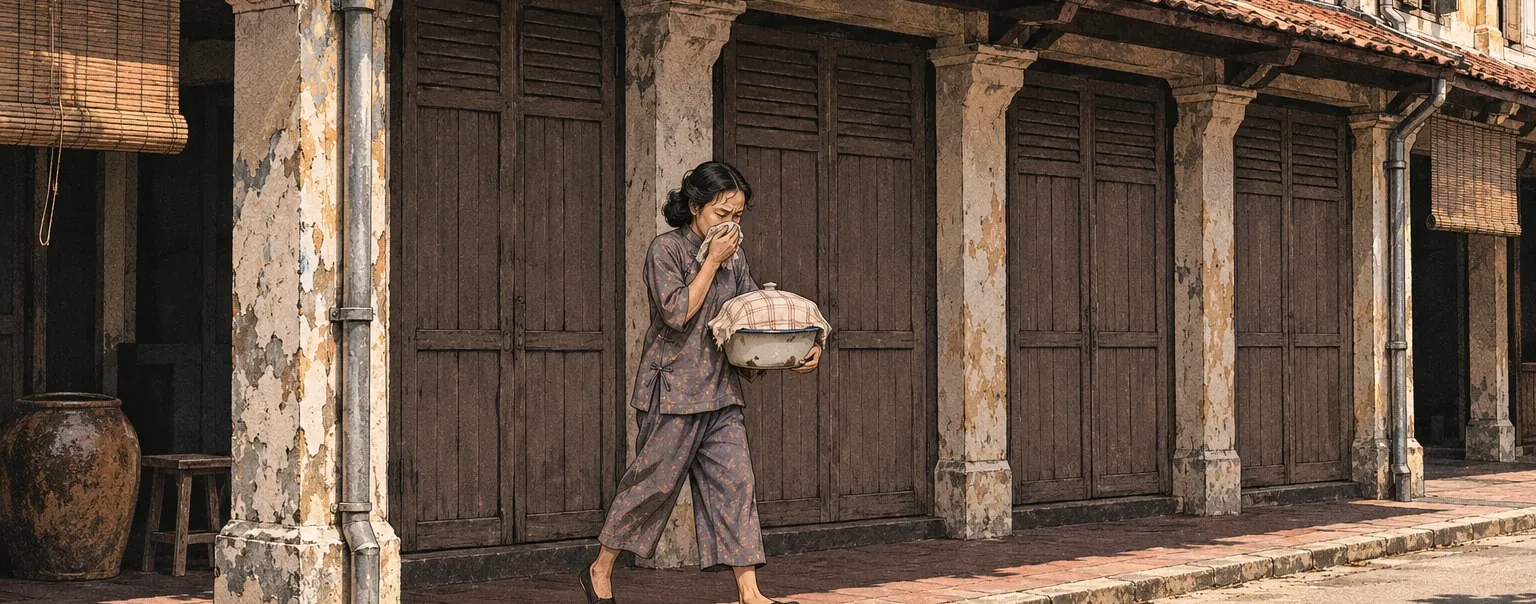
The same shophouse street at midday, nearly empty: four house fronts in a row have their timber shutters closed against the sun; a lone woman hurries along the five-foot way with a covered basin, a cloth over her mouth.
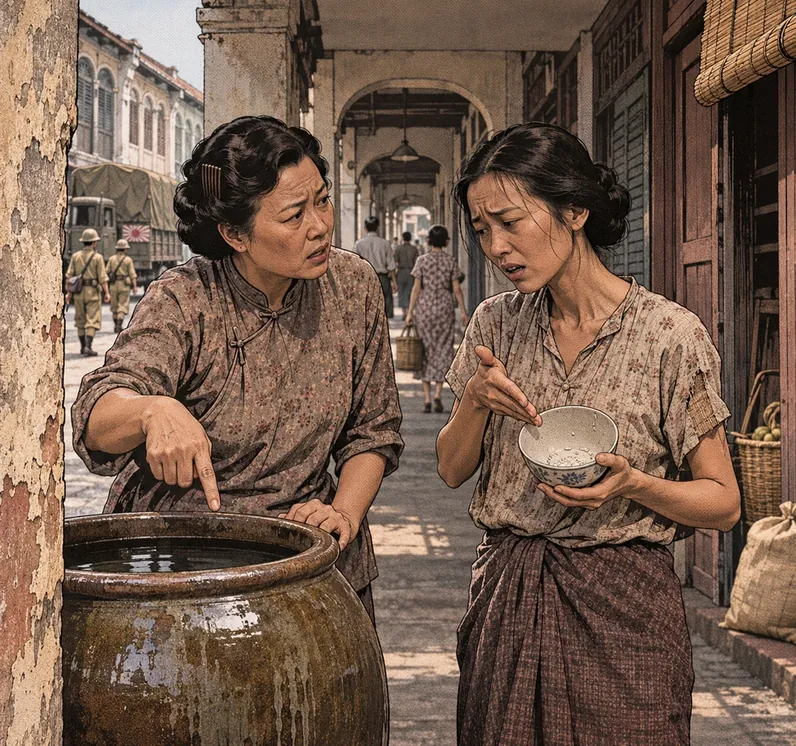
Two neighbour women stand by a big glazed water jar under the five-foot way, talking low; one points at the jar, the other shakes her head and gestures at an almost empty rice bowl in her hand.
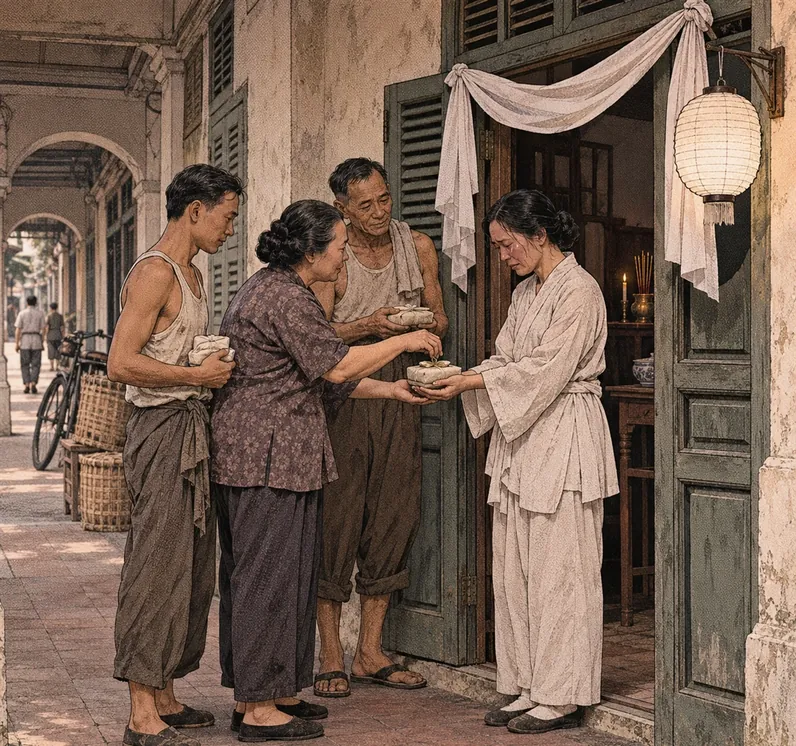
At a shophouse door hung with white mourning cloth, neighbours in worn clothes press small folded bundles and a few coins into the hands of a grieving woman in plain white; a white paper lantern hangs by the door.
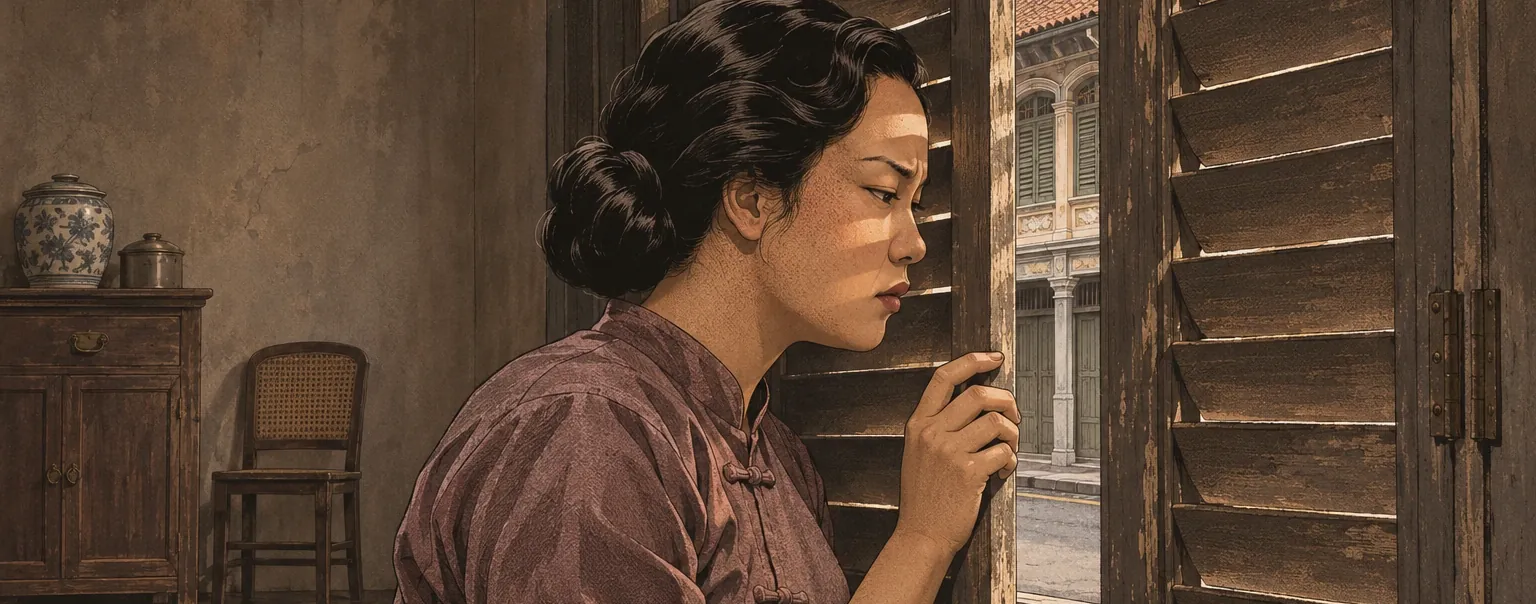
1943: THE SECOND YEAR OF JAPANESE RULE IN SYONAN-TO.RICE WAS RATIONED, AND SHORT.HOUSEHOLDS WERE TOLD TOGROW TAPIOCA AND SWEETPOTATO ON ANY SPAREGROUND. THE OCCUPATIONMONEY BOUGHT LESS EVERYMONTH.THE FEVER CAME TO THE STREET IN THE DRY MONTHS, HOUSEBY HOUSE. IT STARTED TWO DOORS DOWN, WITH A CHILDNOBODY HAD WORRIED ABOUT.BY THE END OF THE WEEKTHERE WERE FOUR HOUSESWITH THEIR SHUTTERSCLOSED AT MIDDAY.It's the water.It's what people areeating. Or not eating.A MAN WHO HAD BEEN A CLERK AT A SHIPPING OFFICEBEFORE THE SURRENDER DIED OF IT, IN HIS OWNBACK ROOM.THE NEIGHBOURS PUT TOGETHER WHAT THEY COULD FORTHE FUNERAL.
1943 · page 2
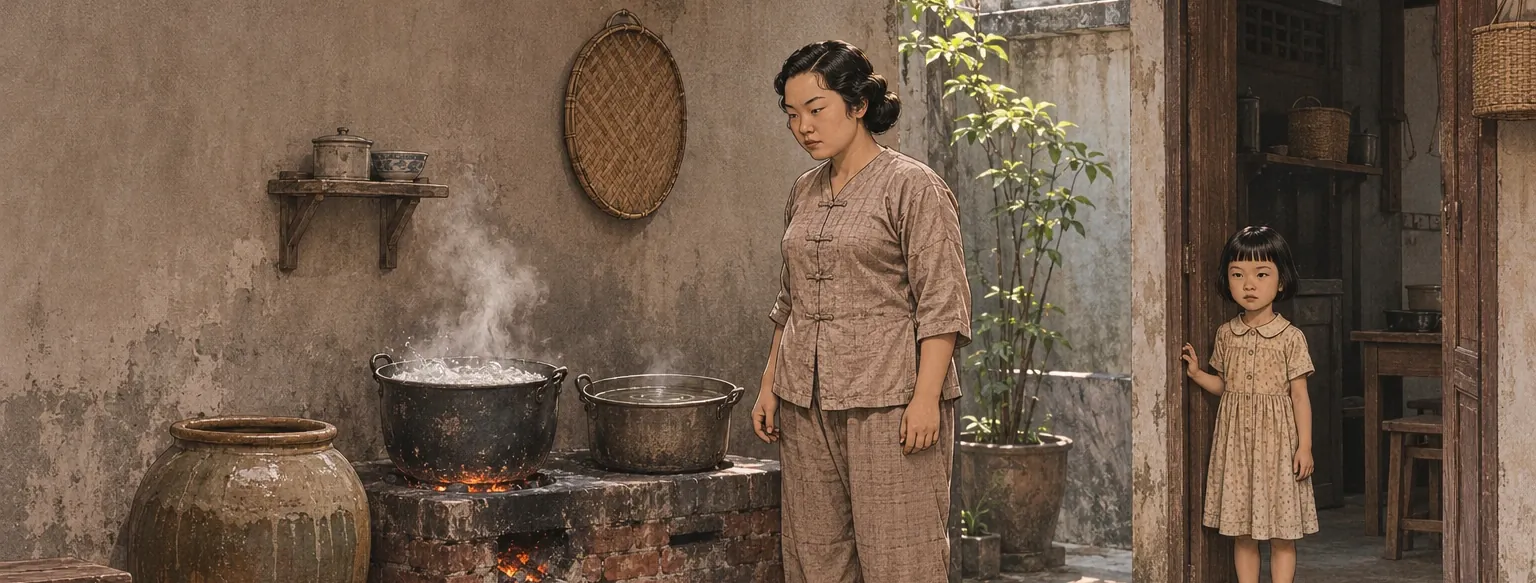
Swee Neo stands at the charcoal stove watching a pot of water come to a rolling boil, a second pot of boiled water cooling beside it; in the kitchen doorway Mei Lin, a three-year-old girl in a simple cotton dress with a short bob and a straight fringe, holds the door frame and watches.
Swee Neo stands at a timber shutter opened a crack, looking down at the closed houses across the street; bars of light across her face; her expression is not relief.
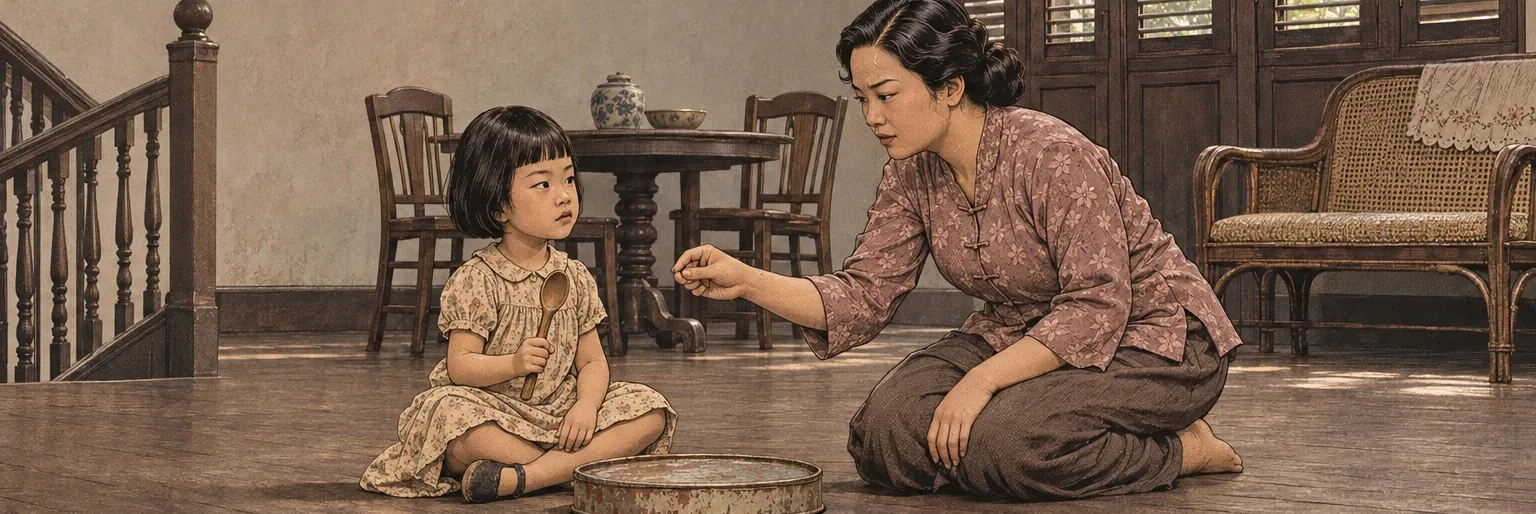
On the floorboards Mei Lin, a three-year-old girl in a simple cotton dress with a short bob and a straight fringe, sits cross-legged behind an old tin lid laid out as a shop counter, a wooden spoon in her fist and a row of nothing in front of her; Swee Neo kneels opposite her as a customer, holding out a pretend coin between finger and thumb.
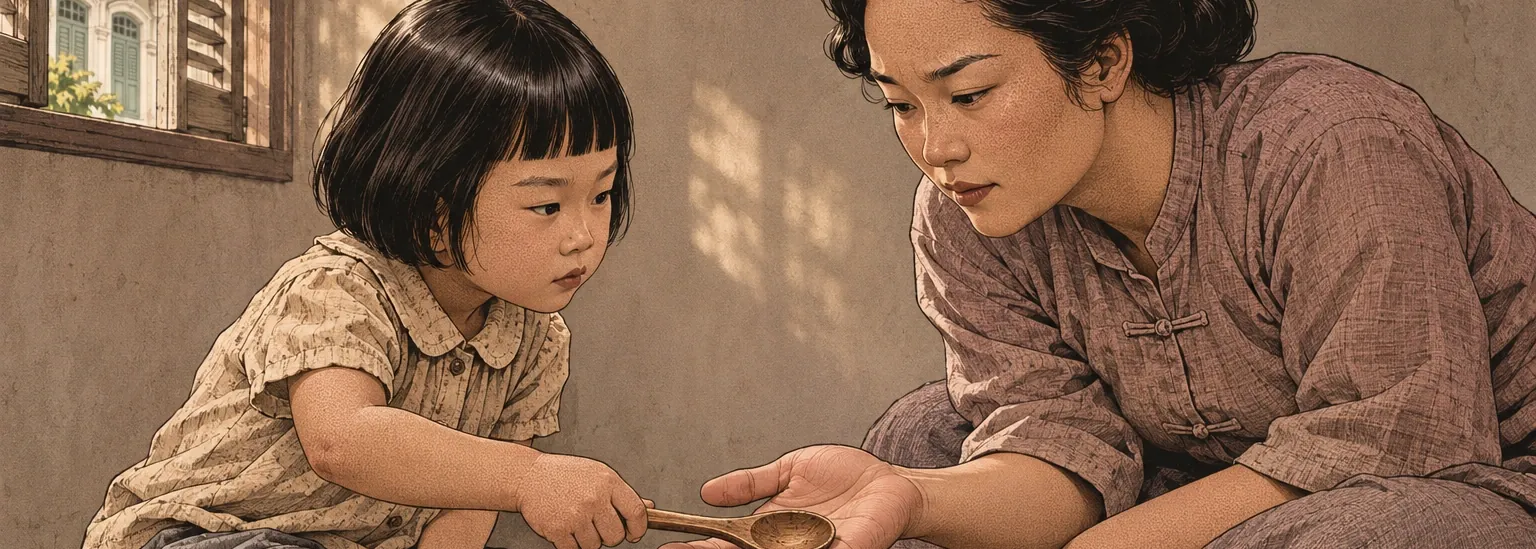
Close on a small child's hand gravely placing a wooden spoon in a woman's open palm, over an old tin lid on the floorboards.
LIM SWEE NEO, 28, BOILED THE WATER TWICE, AND KEPT MEILIN INDOORS.THE HOUSE DID NOT TAKE THE FEVER. SHE DIDNOT KNOW WHY, AND SHE DID NOT FEEL LUCKY.SHE FELT LIKE SOMEONEWHO HAS BEEN LET OFF ADEBT, AND DOES NOT TRUSTTHE PAPER.MEI LIN, 3, DID NOT UNDERSTAND WHY SHE COULD NOT GO TOTHE NEIGHBOURS' DOOR. SO SHE OPENED A SHOP.Rice cakes! Two for a cent!I'll take the whole row.HER MOTHER PAID INIMAGINARY COINS, AND WASHANDED THE SPOON ASCHANGE.FOR THE CHILD IT WAS AQUIET YEAR. SHE WASNEVER ILL ENOUGH THATANYONE SENT FOR THEDOCTOR.
1943 · page 3
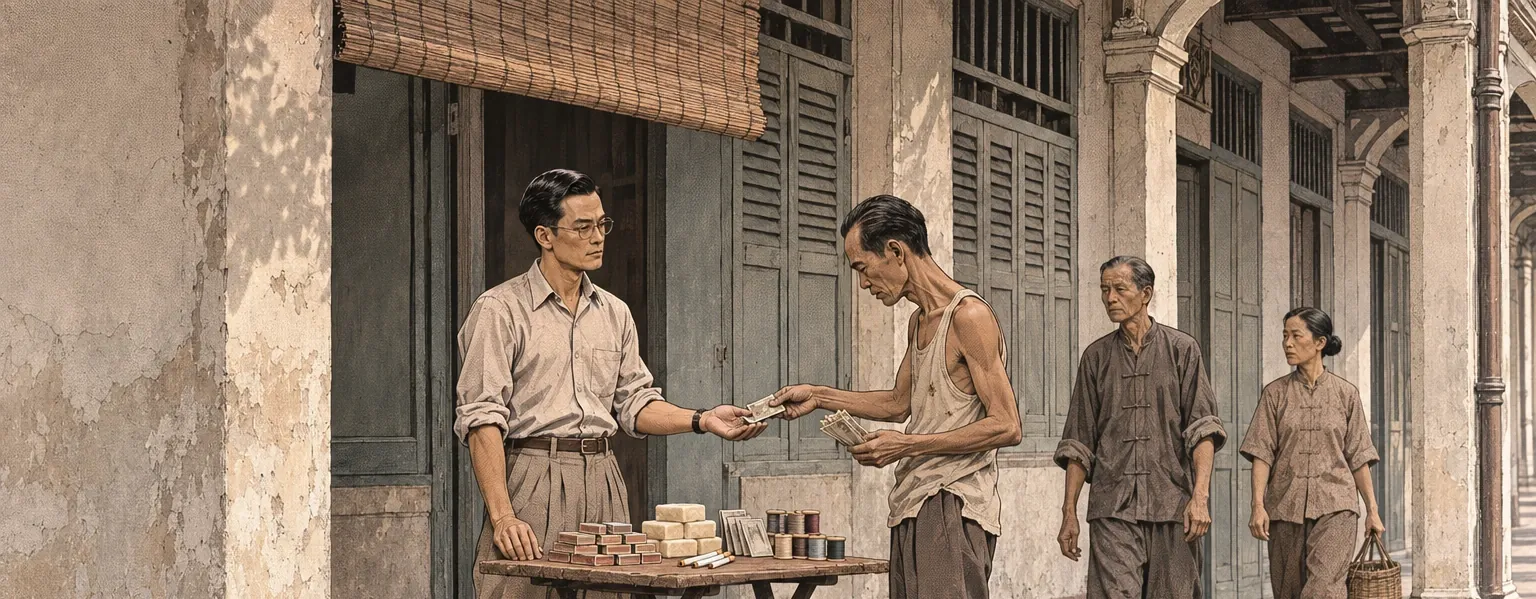
Cheng Huat, in a white cotton shirt gone thin at the collar, sells from a small folding table under the five-foot way: matchboxes, cakes of soap, packets of needles, reels of thread, a few loose cigarettes, all in small heaps; a thin customer counts creased occupation banknotes into his hand.
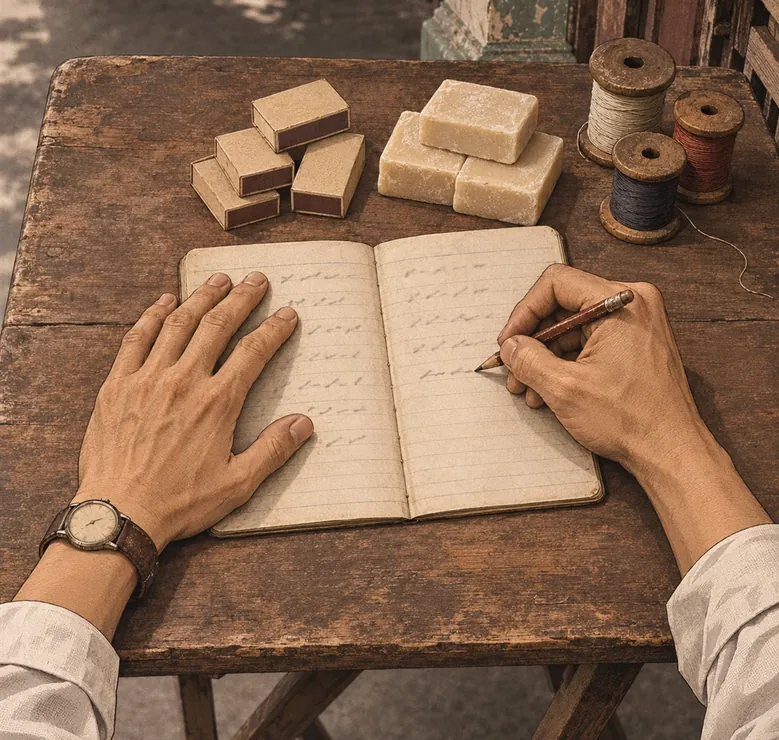
Looking down over a man's shoulder at his small wooden stall table: a slim pocket notebook lies open flat on the tabletop, two plain ruled pages with short lines of handwritten figures (unreadable). His right hand writes a new line with a short pencil, held normally; his left hand rests flat on the facing page to hold it open. Around the notebook, small heaps of matchboxes, cakes of soap and reels of thread. Only his hands, forearms and white shirt cuffs are seen, no face.
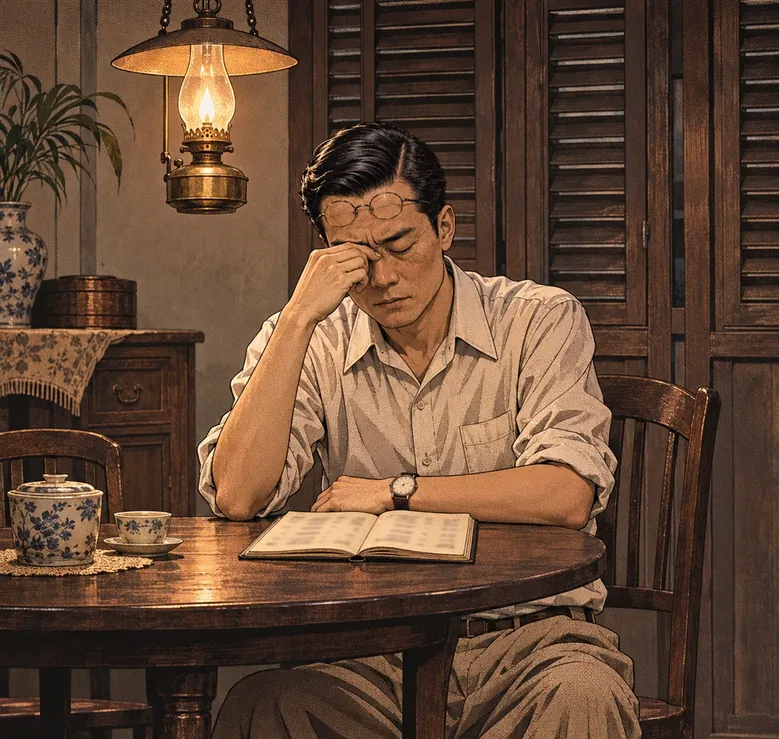
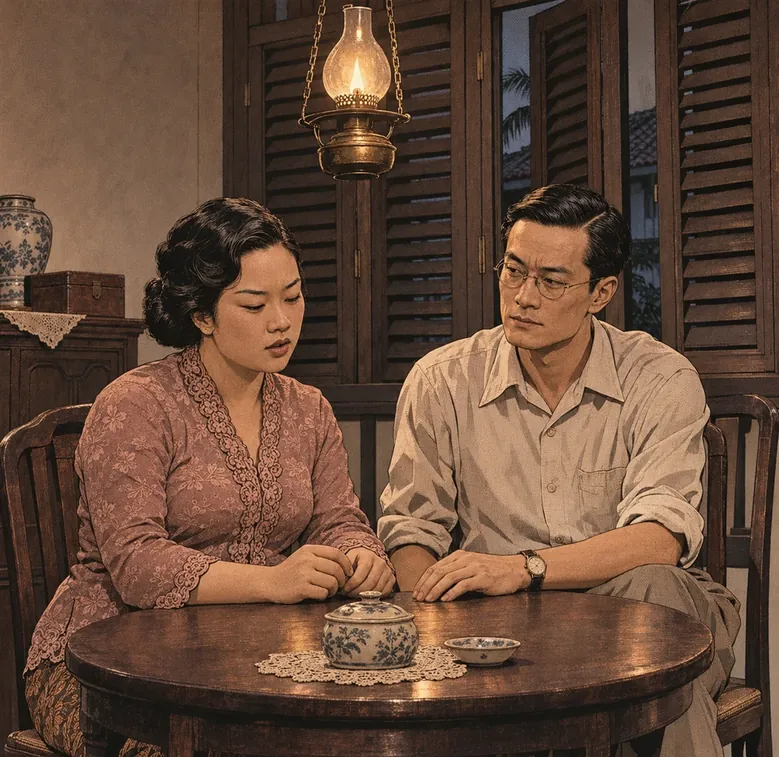
Cheng Huat sits at the round table under the lamp with the narrow notebook open, glasses pushed up, rubbing his eyes, a column of figures in front of him.
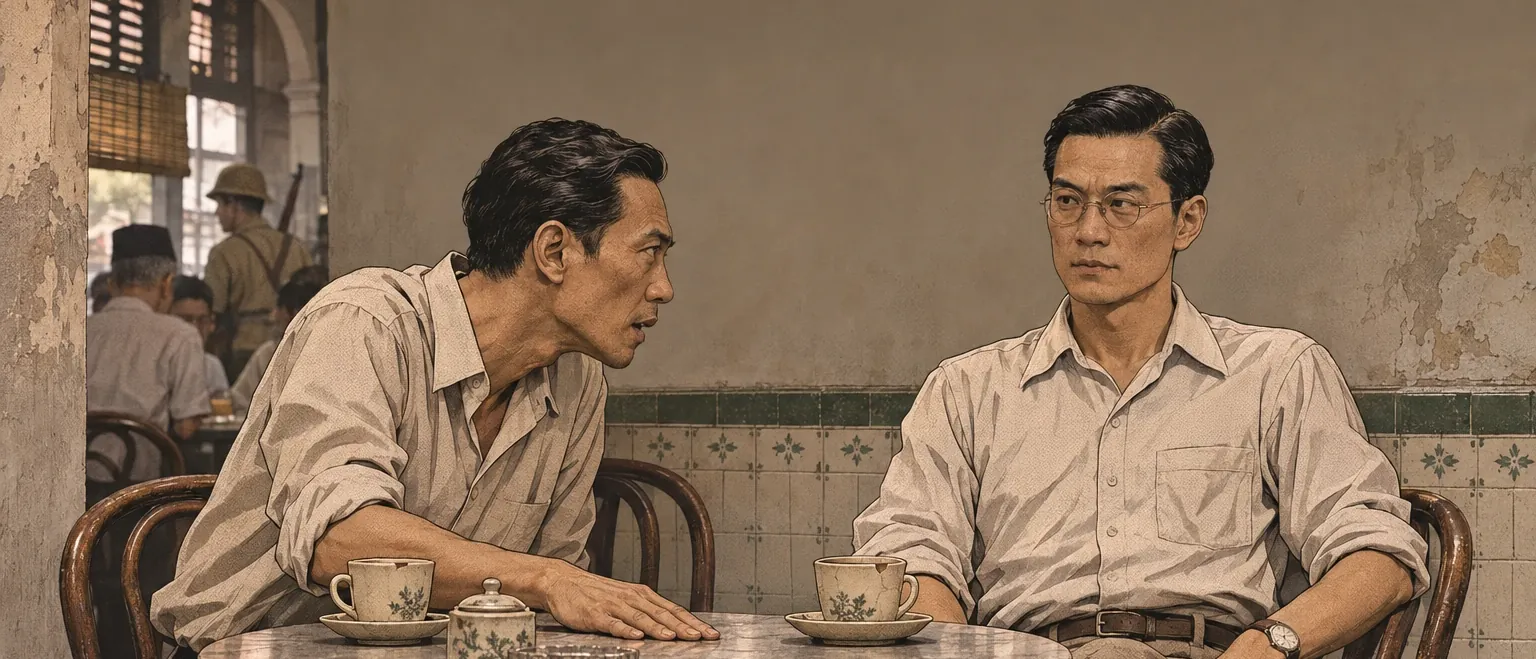
Cheng Huat sits at the marble-topped table opposite a lean man who leans in close and talks low, one hand flat on the table; Cheng Huat listens, very still, his cup untouched.
TAN CHENG HUAT, 35, HAD SPENT HIS LIFE SELLING CLOTHBY THE BOLT TO PEOPLE WHO KNEW WHAT THEY WANTED.THAT YEAR HE SOLD THINGS BY THE HANDFUL, TO PEOPLE WHOWOULD TAKE WHATEVER THERE WAS.HE DID IT WITH A LEDGER: ANARROW BOOK IN HIS INSIDEPOCKET. WHAT HE BOUGHT,AND FROM WHOM. WHAT HESOLD, AND FOR HOW MUCH.ON THE NEXT LINE,WHAT IT WOULD COSTTO REPLACE. IT WASNEVER WHAT HE HADSOLD IT FOR.THE FIGURES WEREBIGGER EVERY MONTH,AND MEANT LESS. HEWROTE THEM ANYWAY.MID-YEAR, A MAN HE KNEW A LITTLE FROM BEFORE THE WAROFFERED HIM A PLACE IN A TRADE.Scarce goods. Moved withoutthe administration knowing.It's not a big place. And Iwon't pretend it's safe.I'll think about it.
1943 · page 4
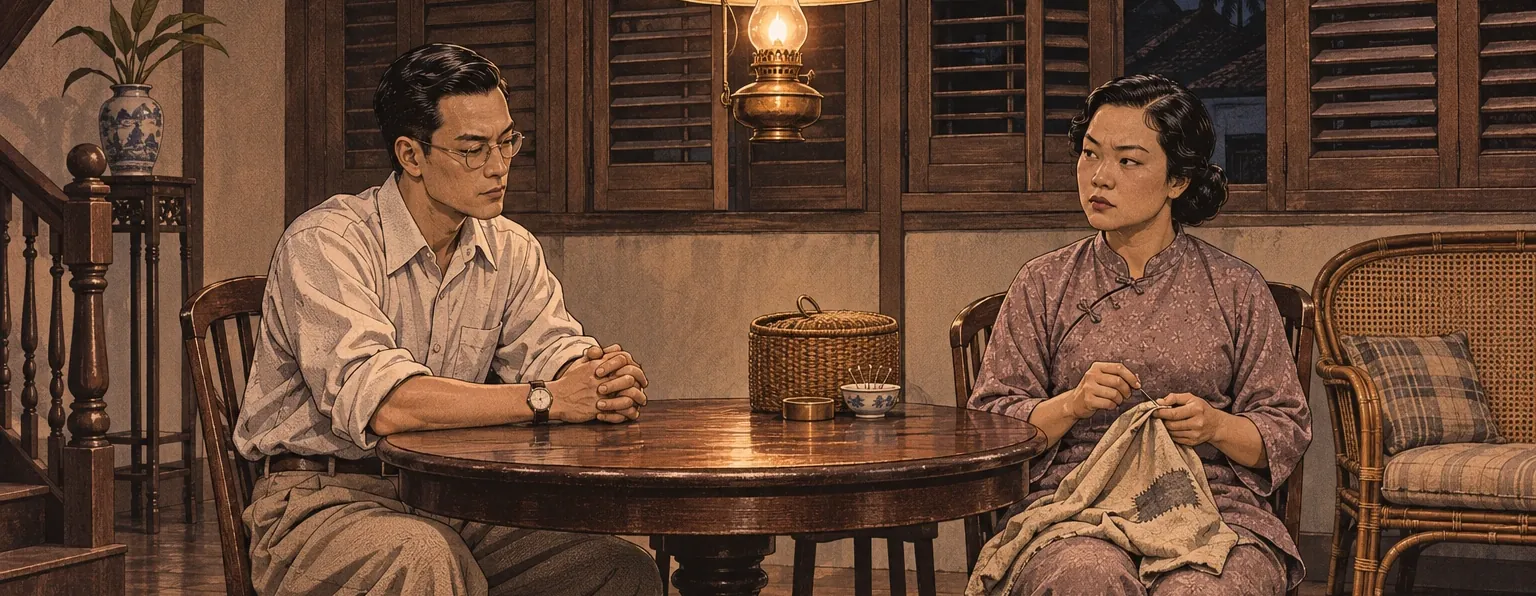
Cheng Huat sits at the round table with his hands clasped, thinking, the lamp between him and Swee Neo, who sits across from him with mending in her lap, watching him and saying nothing.
Swee Neo by the lamp, her needle stopped mid-stitch, looking across the table at someone out of frame; her mouth closed.
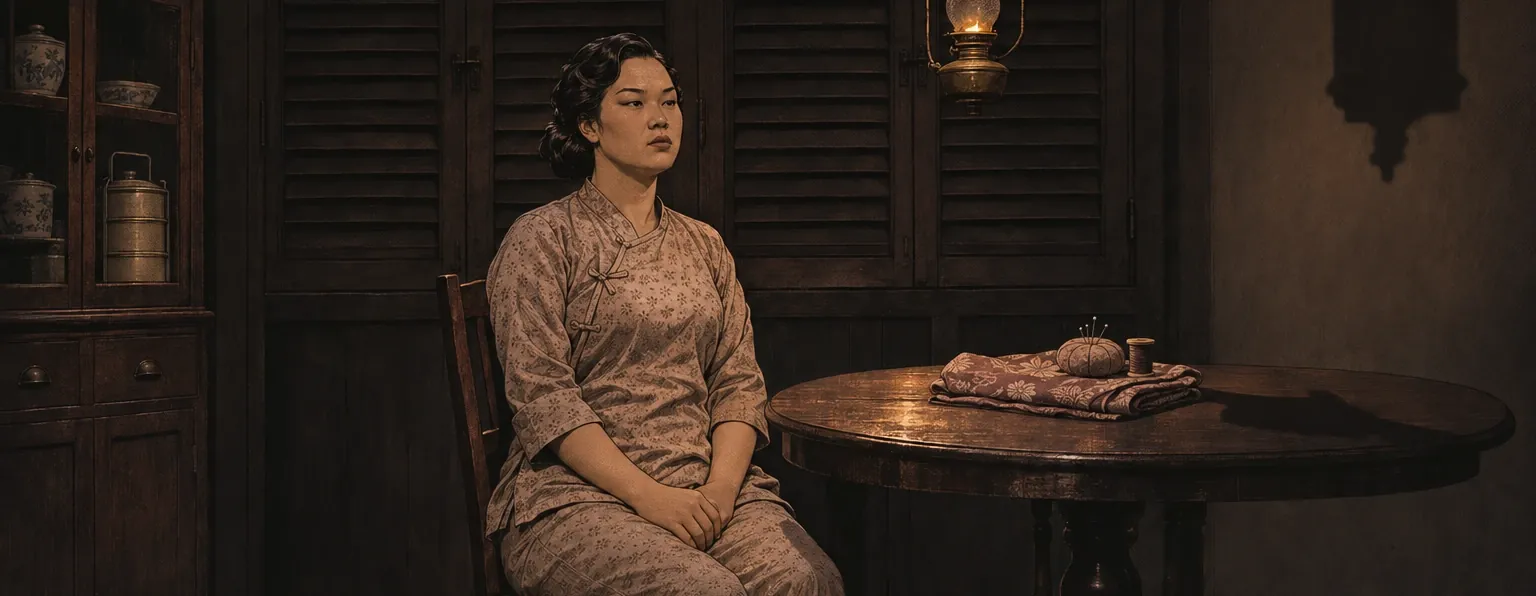
Swee Neo sits alone at the round table late at night, the oil lamp turned right down, her hands lying still in her lap; a folded piece of mending lies untouched on the table beside a wall clock's shadow.
HE THOUGHT ABOUT IT FORTWO EVENINGS, AT THETABLE, IN FRONT OF HISWIFE.THEN HE TOOK IT, ONTERMS AS SMALL AS THEMAN WOULD ALLOW.HE DID NOT DESCRIBE ITTO HER AFTERWARDS. SHEDID NOT ASK HIM TO.HE WAS HOME BEFORE THE CURFEW ON EVERYNIGHT BUT TWO.ON THOSE NIGHTS SHE SATUP WITH THE LAMP TURNEDDOWN, HER HANDS IN HERLAP, AND DID NOT MENDANYTHING.
1943 · page 5
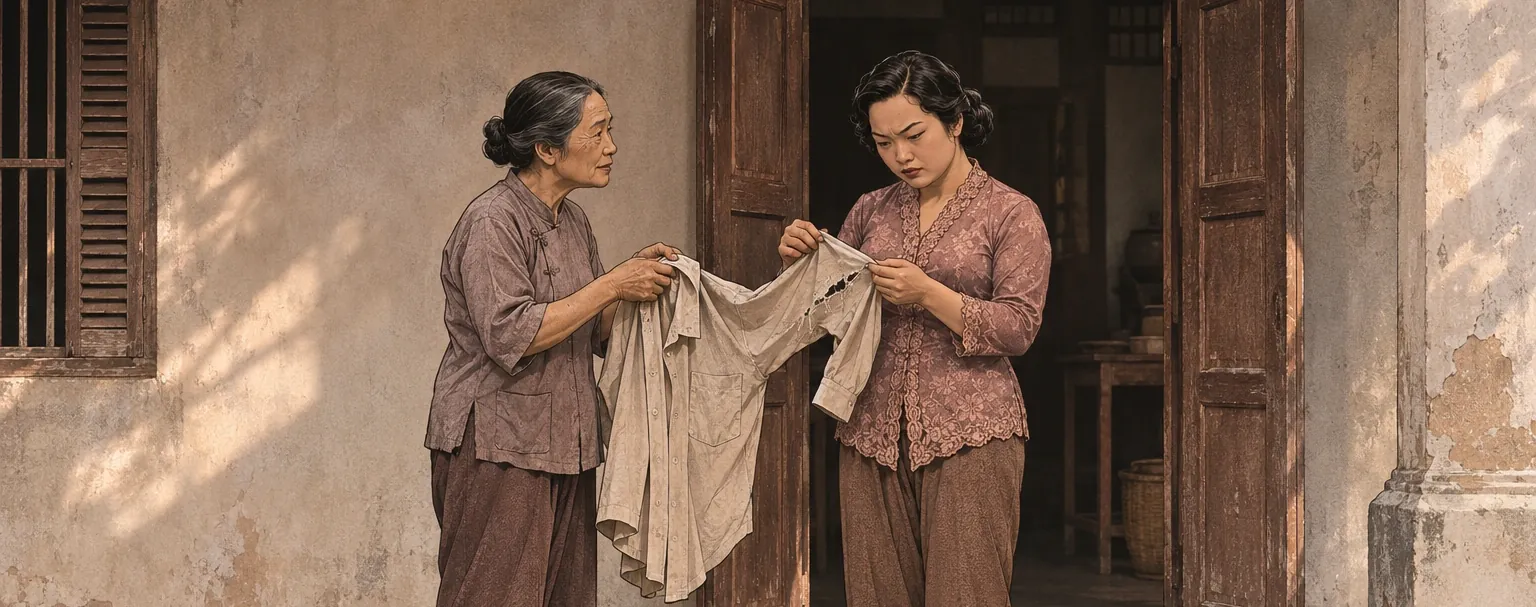
At the shophouse door a neighbour woman hands Swee Neo a man's shirt with a torn sleeve; Swee Neo takes it and looks at the tear, already working out the mend.
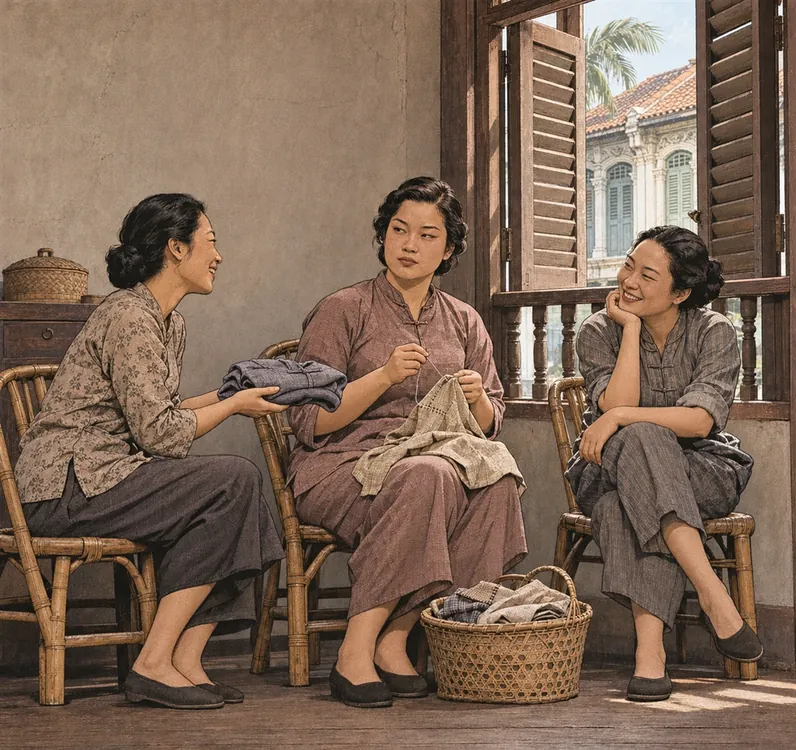
Swee Neo sews by the window, a rattan basket of folded mending at her feet, while two women sit with her, one handing over a garment, chatting easily.
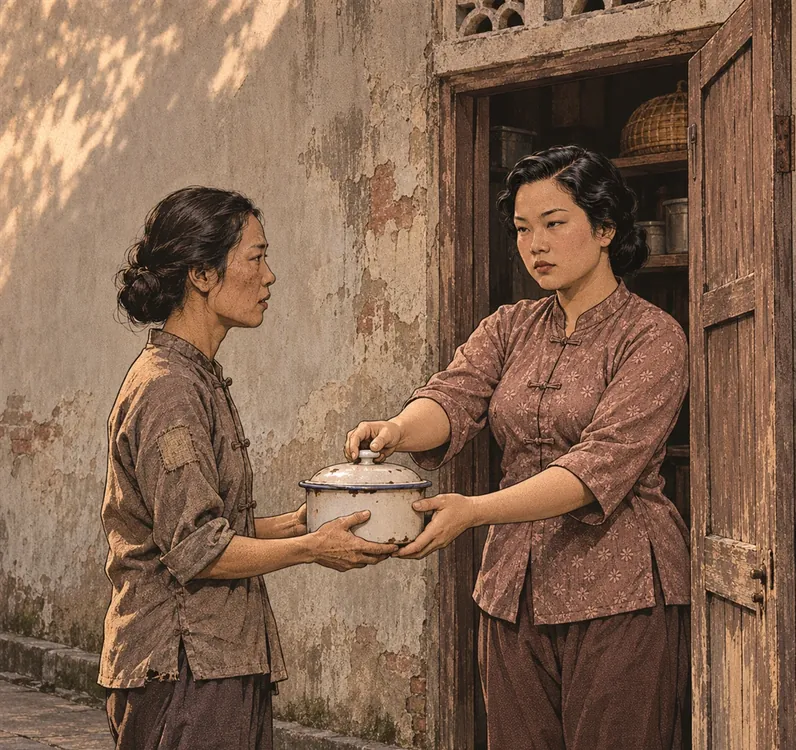
At the back door Swee Neo hands a covered enamel pot to a waiting woman in the lane, who takes it with both hands.
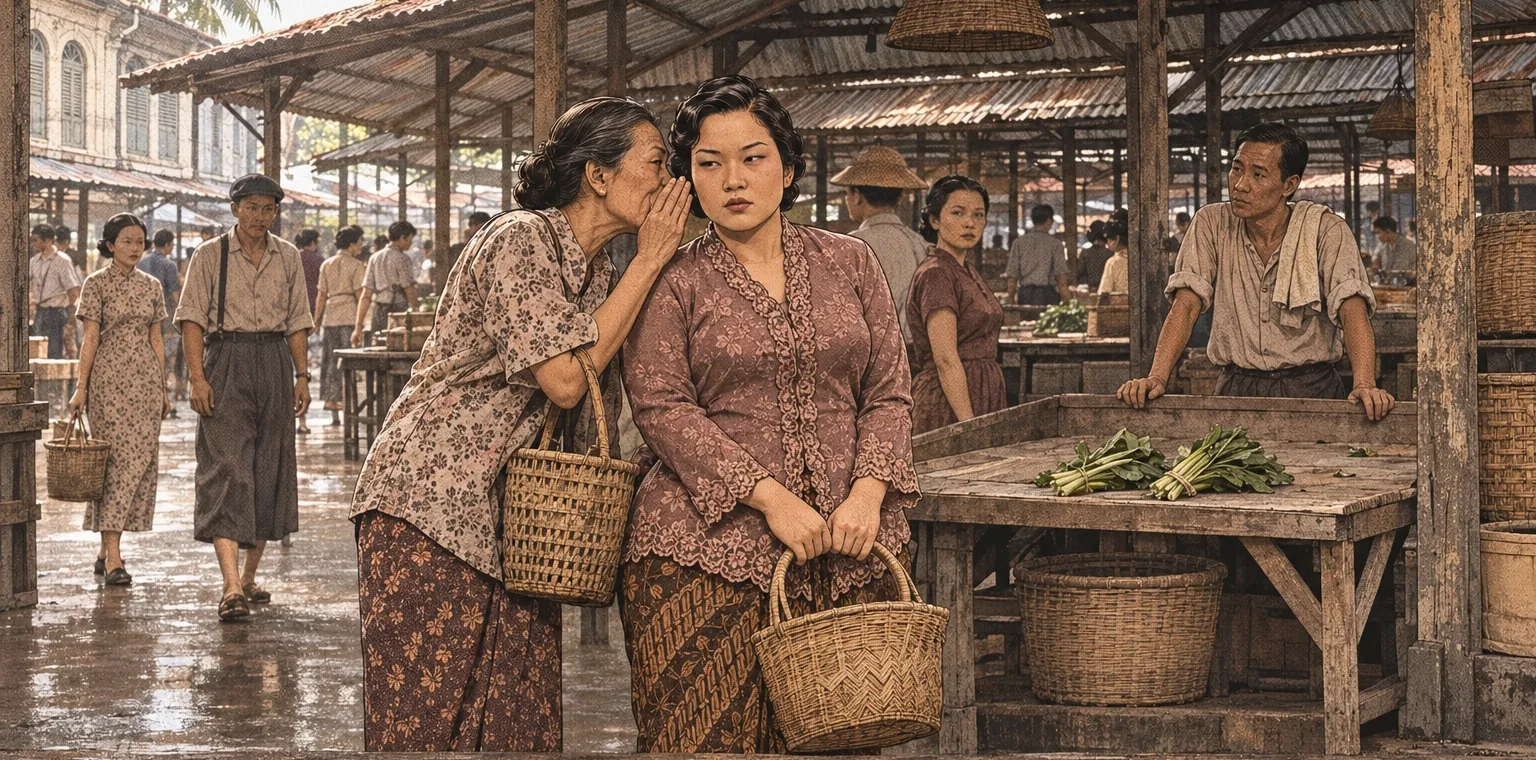
At a market stall with only a few bundles of greens, an older woman leans close to Swee Neo and speaks low behind her hand; Swee Neo stands holding her basket, listening, her face going still.
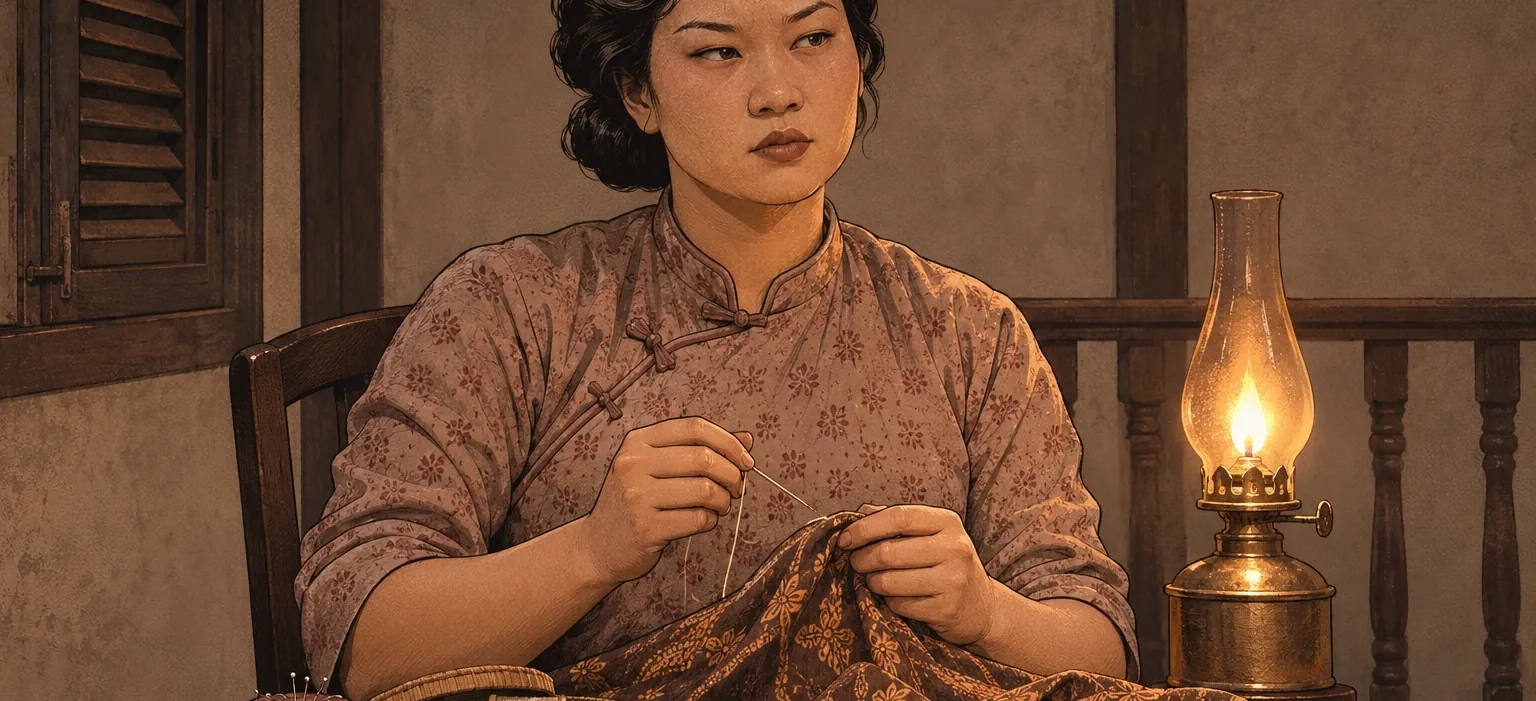
SWEE NEO BEGAN TO SEW FOR OTHERPEOPLE. IT WAS NOT ANNOUNCED.A NEIGHBOUR LEFT A TORNSLEEVE AT THE DOOR ANDCAME BACK FOR IT WITH AFEW CENTS. A WEEK LATERSHE BROUGHT HERSISTER'S.BY THE MIDDLE OF THE YEAR SHE HAD A BASKET BYTHE WINDOW, AND A REGULAR SET OF WOMEN WHO KNEWHER NAME.THEY DID NOT ASK WHOSEDAUGHTER SHE WAS.SHE COOKED MORE THAN THE HOUSEHOLD NEEDED. THESURPLUS WENT OUT OF THE BACK DOOR IN A COVEREDPOT, TO SOMEONE WHO SAID THEY WOULD PAY.SOMETIMES THEY DID. NOT ASALARY: A WAY OF KEEPINGTHE DAYS FROM BEINGNOTHING.THAT AUTUMN, WORD CAME OF A RELATIVE'S TROUBLE. ITCAME BY WAY OF A WOMAN AT THE MARKET.IT CAME WITHOUT ANYDETAIL SHE COULD DOANYTHING ABOUT.
1943 · page 6
Swee Neo and Cheng Huat sit at the round table; she speaks briefly, eyes down, and he listens, one hand on the table near hers.
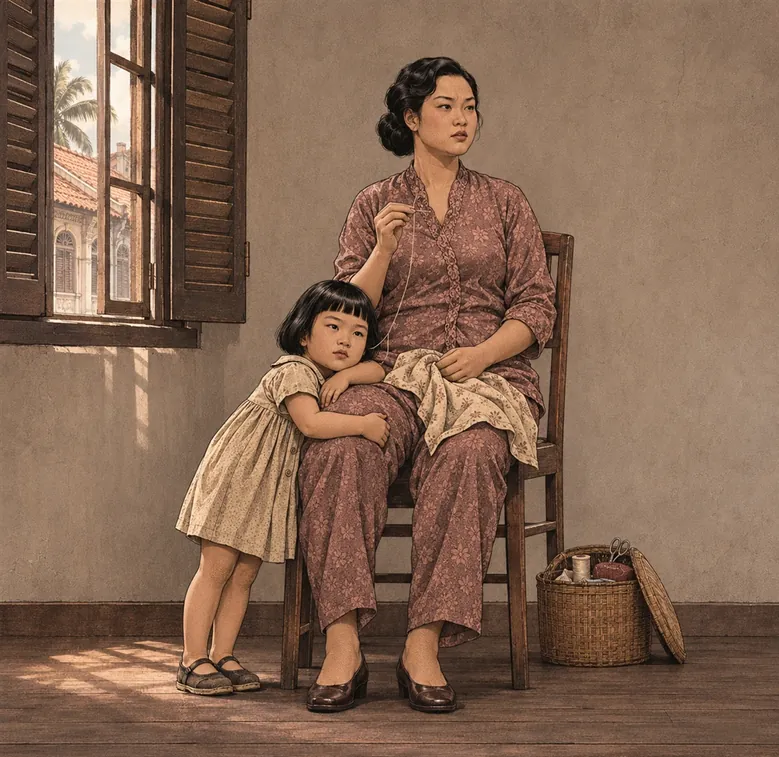
Swee Neo sits sewing by the window; Mei Lin, a three-year-old girl in a simple cotton dress with a short bob and a straight fringe, leans her whole weight against her mother's knee; Swee Neo has stopped, needle held up, and lets her.
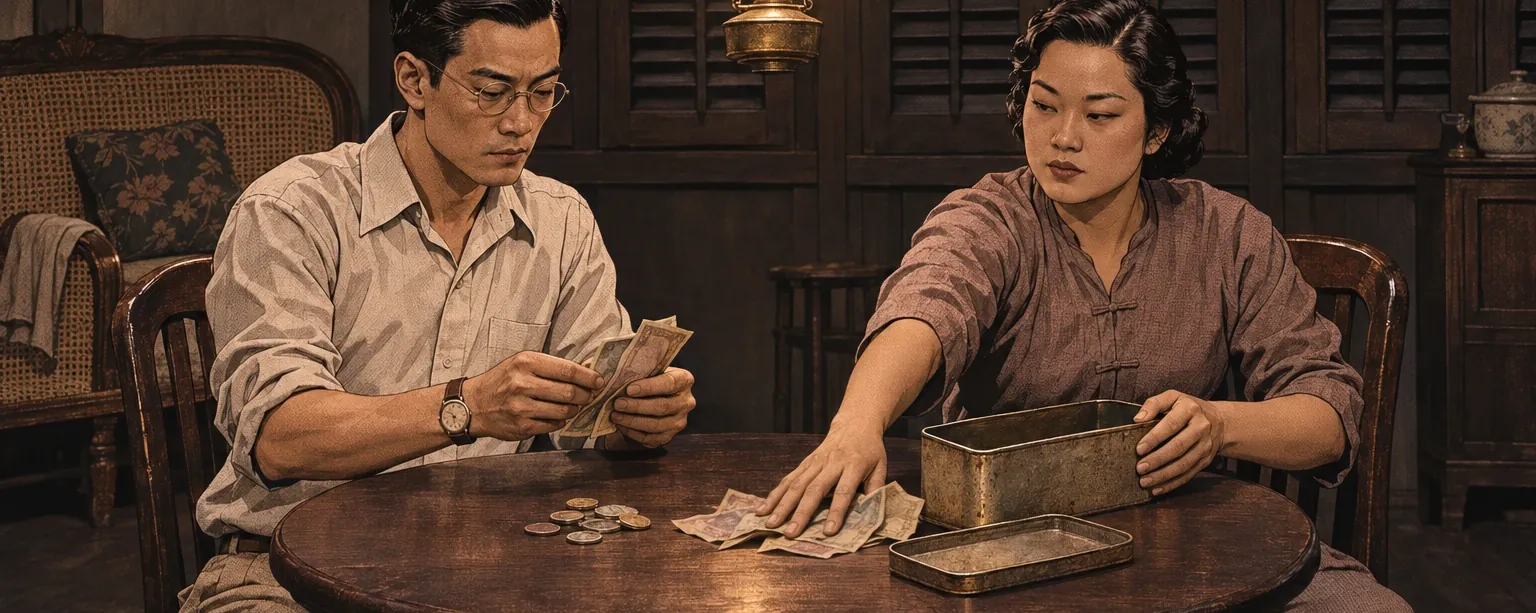
At the round table under the lamp, Cheng Huat counts a few creased occupation banknotes and a little pile of coins onto the tabletop; across from him Swee Neo is already reaching to sweep the notes into an old biscuit tin with its lid off.
SHE TOLD CHENG HUAT THE PART SHE COULD SAY OUTLOUD.SHE KEPT THE REST.SHE WENT ON WITH THE MENDING. WHEN MEI LINCAME TO LEAN ON HER KNEE, SHE STOPPED, AND LETHER.AT NIGHT HE COUNTED THEDAY'S TAKINGS ONTO THETABLE: A FEW NOTES, ANDSOME COINS.SHE PUT THE NOTES IN THE TIN BEFOREEITHER OF THEM COULD CHANGE THEIR MINDABOUT WHAT THEY WERE WORTH.
The year in money. Household income about $148 a month, against a peer median of $42: 3.5 times the median (nominal dollars; a model estimate).
The real 1943

Singapore, renamed Syonan-to, is under Japanese military administration in 1943. Food is controlled: rice is rationed and short, and the authorities urge households to grow tapioca, sweet potato and vegetables on any spare ground. Hunger, beriberi, malaria and dysentery rise through the year.

More on Singapore in 1943 ▸

Behind the dice How likely was each thing that happened? (Spoilers)

Nothing in The Dice Decides is chosen by a writer. Each person's year is a set of rolls, weighted by their stats and their times; the story is written afterwards to fit what the dice decided.

WhoWhat the dice decidedResultChance
Tan Cheng HuatAn old acquaintance offers a small share in a scarce-goods trade; after two evenings, he takes it.black market trade7%
Tan Cheng HuatCheng Huat earns again, selling small goods by the handful and keeping a narrow ledger.yes35%
Lim Swee NeoSwee Neo sews for the neighbours and sells cooked food from the back door.yes28%
Tan Mei LinFever runs through the street; shutters close at midday; the household is spared.epidemic9%
Tan Mei LinA quiet year for the child: kept indoors, she plays shop with a tin lid and a spoon.quiet41%
Lim Swee NeoWord at the market of a relative's trouble, which she only half tells.bad news12%
Tan Mei LinNo serious illness for Mei Lin; nobody sends for the doctor.no98%
Tan Mei LinPrices climb, but nothing more has to be sold this year.no81%
Tan Mei LinMei Lin alive at the year's end.no96%
Tan Cheng HuatCheng Huat is not seriously ill.no95%
Tan Cheng HuatCheng Huat survives the year.noover 99%
Lim Swee NeoSwee Neo is not seriously ill.no93%
Lim Swee NeoSwee Neo alive at the year's end.noover 99%
Tan Cheng HuatThe military police do not come for Cheng Huat.none82%

Chances are the simulation's model assumptions, not historical statistics.

Household income as a multiple of the peer median, 1941–1943
0×4×8×12×peer median1943
Show as a table
YearHousehold a monthPeer medianMultiple
1941$504$4212.0×
1942$82$422.0×
1943$148$423.5×

Nominal dollars; the engine's model estimate, the same figure as each issue's money line.

The chapter in prose

1943: Small Goods

In 1943, the third year of the war for the Tan family and the second under Japanese rule in Syonan-to, Tan Cheng Huat finds a way to earn again without a firm. He buys and sells small goods, and takes a careful share in a scarce-goods trade he would once have refused. Lim Swee Neo sews and sells at home, and gets worrying news of a relative. Fever and hunger-sickness run through the neighbourhood and the household is spared. Their three-year-old daughter, Mei Lin, has a quiet year.

The Fever Street

The fever came to the street in the dry months, house by house. It started two doors down, with a child nobody had worried about, and by the end of the week there were four houses with their shutters closed at midday. Someone said it was the water. Someone else said it was what people were eating, or not eating. A man who had been a clerk at a shipping office before the surrender died of it in his own back room, and the neighbours put what they could together for the funeral.

Lim Swee Neo boiled the water twice and kept Mei Lin indoors. The house did not take the fever. She did not know why, and she did not feel lucky; she felt like someone who has been let off a debt and does not trust the paper.

Mei Lin did not understand why she could not go to the neighbours' door. She was three. She sat on the floor of the front room with the old tin lid and a wooden spoon and a row of rice cakes made of nothing, and announced that she was selling them, two for a cent, and her mother paid for the whole row with imaginary coins and was handed the spoon as change.

It was, for the child, a quiet year. She was never ill enough that anyone sent for the doctor.

Small Goods

Tan Cheng Huat had spent his life selling cloth by the bolt to people who had known what they wanted. The year taught him to sell things by the handful to people who would take whatever there was.

He did it the way he did everything, with a ledger. He had no godown now and no clerk. He kept a narrow book in his inside pocket, in which he wrote down what he had bought and from whom, what he had sold and for how much, and on the next line what it would cost him to replace it, which was never what he had sold it for. The figures were bigger every month, and meant less. He wrote them anyway.

Mid-year a man he knew a little, from before the war, offered him a place in a trade that moved scarce goods without the military administration's knowledge. It was not a large place, and the man did not pretend it was safe. Cheng Huat said he would think about it. He thought about it for two evenings, at the table, in front of his wife, and then took it, on terms he made as small as the man would allow. He did not describe it to her afterwards, and she did not ask him to.

He was home before the curfew on every night but two. On those nights she sat up with the lamp turned down, her hands in her lap, and did not mend anything.

Needle and Pot

Swee Neo began to sew for other people. It was not announced. A neighbour with a torn sleeve left it at the door and returned for it with a few cents, and a week later brought her sister's. By the middle of the year she had a basket by the window and a regular set of women who knew her name and did not ask whose daughter she was.

She also cooked more than the household needed. The surplus went out the back door in a covered pot, to someone who could pay for it and had said they would, and sometimes did. It was money that came in small pieces, and she saw it that way: not as a salary, but as a way of keeping the days from being nothing.

Word came that autumn of a relative's trouble. It reached her by way of a woman at the market, and arrived without any detail she could do anything about. She told Cheng Huat the part she could say out loud. She kept the rest, and went on with the mending, and when Mei Lin came to lean on her knee she stopped and let her.

At night he counted the day's takings onto the table, a few notes and some coins, and she put the notes in the tin before either of them could change their mind about what they were worth.