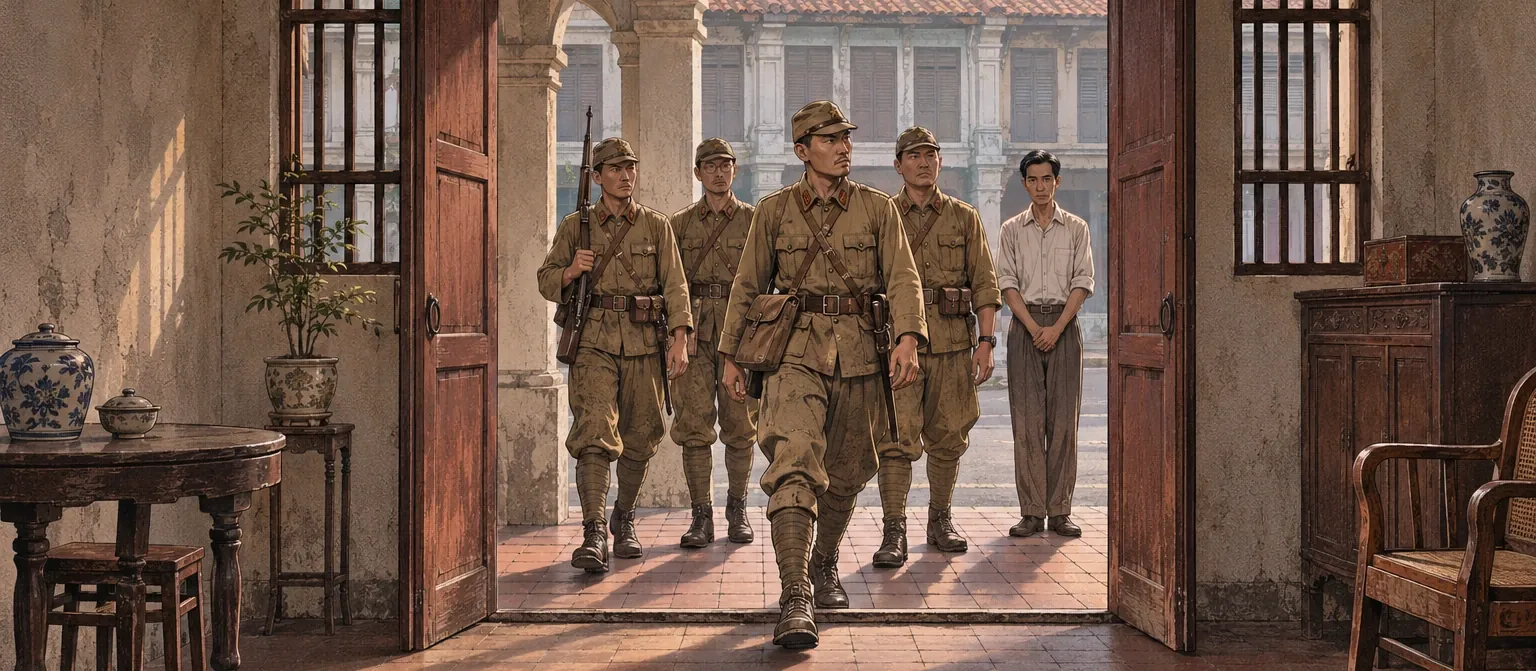
In 1945 the Japanese Occupation ends. Early in the year soldiers search the Tan house and frighten Lim Swee Neo, who is already weakened by hunger, and her sewing falls off. When Japan surrenders in August, the street comes together, and when the British return Tan Cheng Huat is among the first to trade again. Five-year-old Mei Lin has a quiet year, and all three of them are alive when it ends.
A work of fiction set in real history. The characters are invented; the historical events are real and sourced.
In 1944, the Tan family's fourth year of war, the street holds together. Neighbours share what they have and warn one another of what they hear, and an older neighbour is kind to four-year-old Mei Lin. Tan Cheng Huat's small trading holds up, and he and Lim Swee Neo grow closer in the evenings. Swee Neo's sewing and cooking bring in more custom, but she eats last and hunger leaves her weaker. Nobody in the house dies or falls seriously ill, and the military police pass the door.
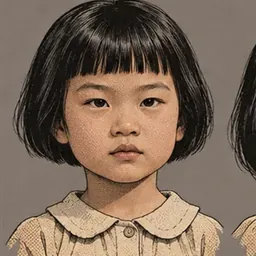
the child of the house

her father, a merchant
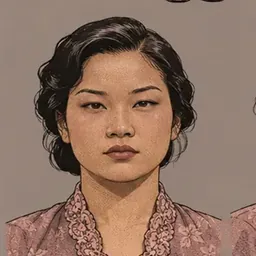
her mother
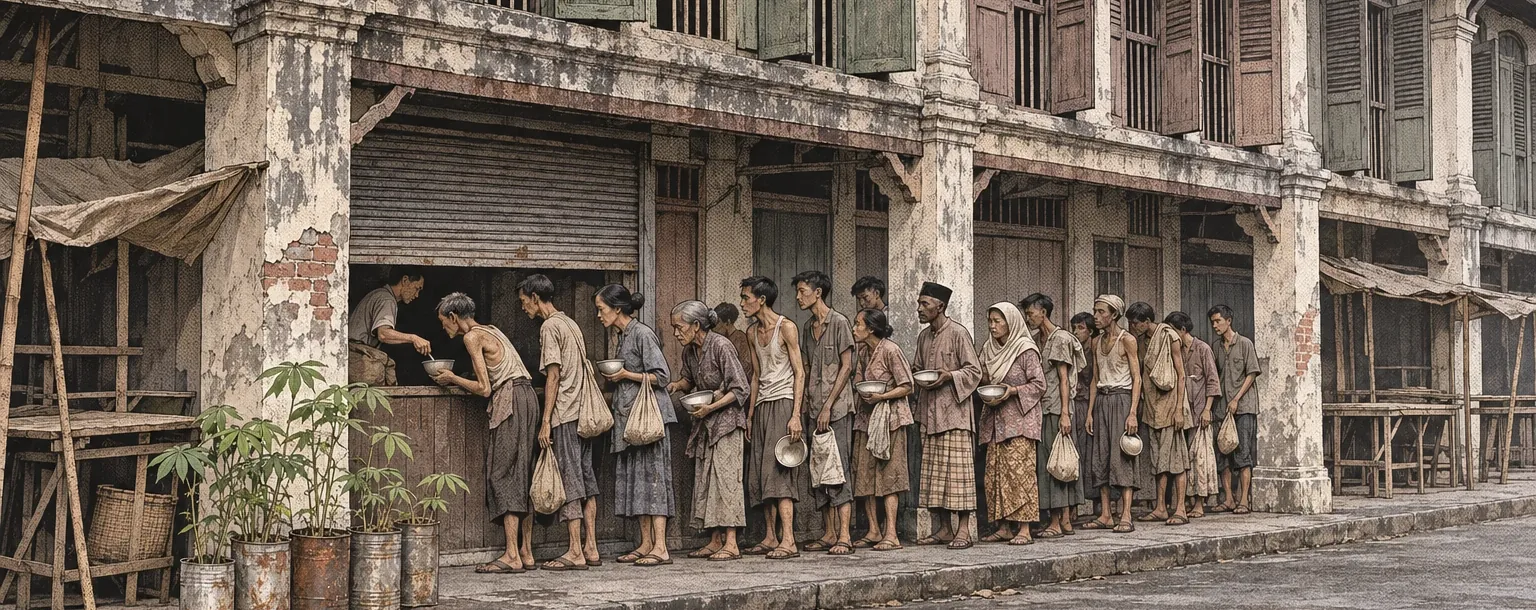
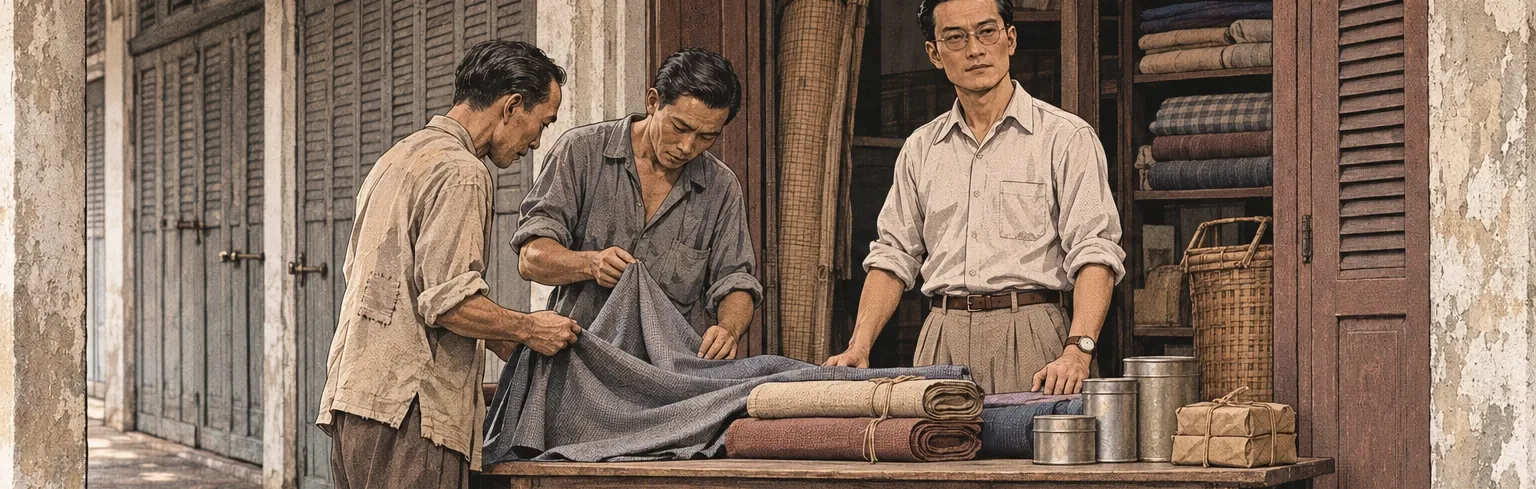
In early 1945 Syonan-to is at its hungriest: rations are minimal, prices are extreme, and Allied bombers raid the harbour and naval base. Japan announced its surrender on 15 August 1945; the British Military Administration took over after the formal surrender ceremony on 12 September (British forces landed from 5 September).
Behind the dice How likely was each thing that happened? (Spoilers)
Nothing in The Dice Decides is chosen by a writer. Each person's year is a set of rolls, weighted by their stats and their times; the story is written afterwards to fit what the dice decided.
| Who | What the dice decided | Result | Chance |
|---|---|---|---|
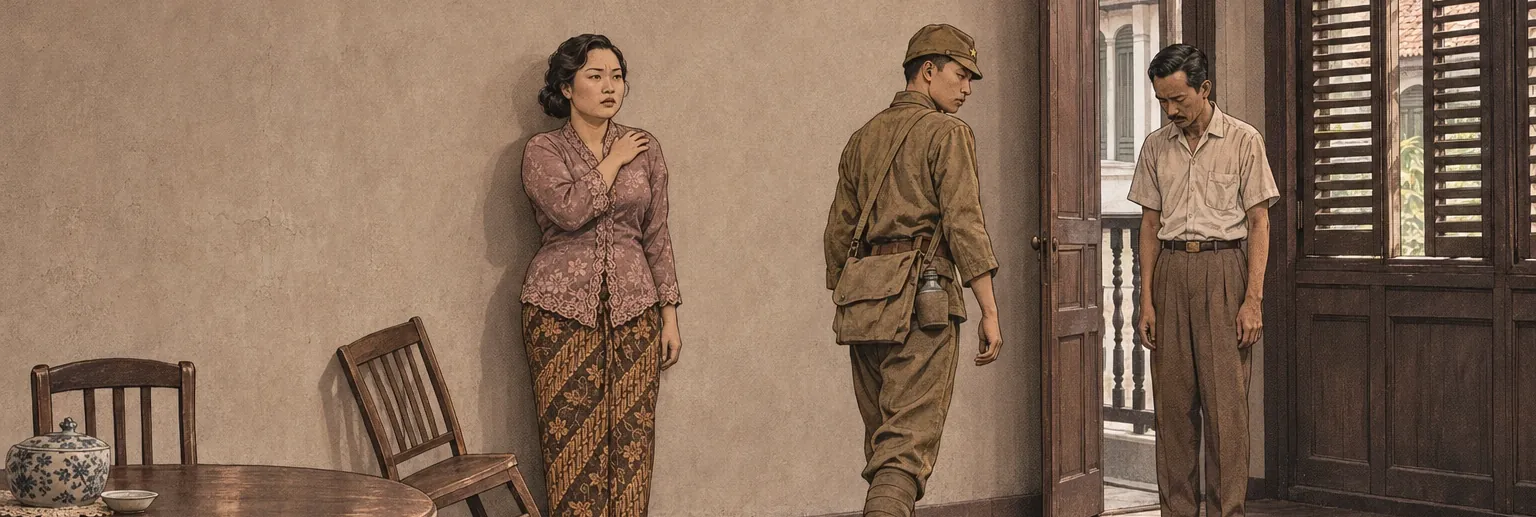
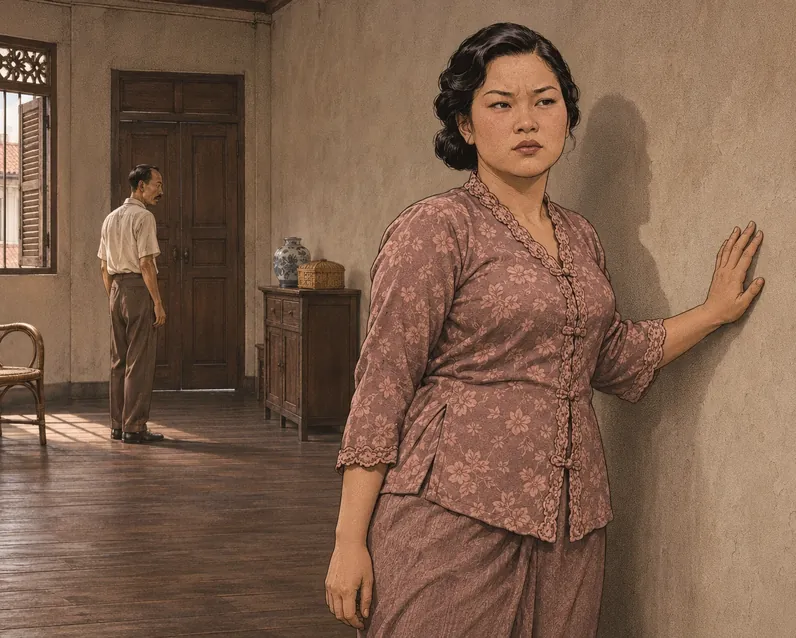
| Lim Swee Neo | Soldiers search the house; one shoves Swee Neo against the wall. | soldiers | 6% |
| Tan Cheng Huat | Among the first in the district to trade again once the British return; the green ledger comes out. | yes | 44% |
| Lim Swee Neo | After the search her hands are not steady and the sewing custom falls away. | no | 60% |
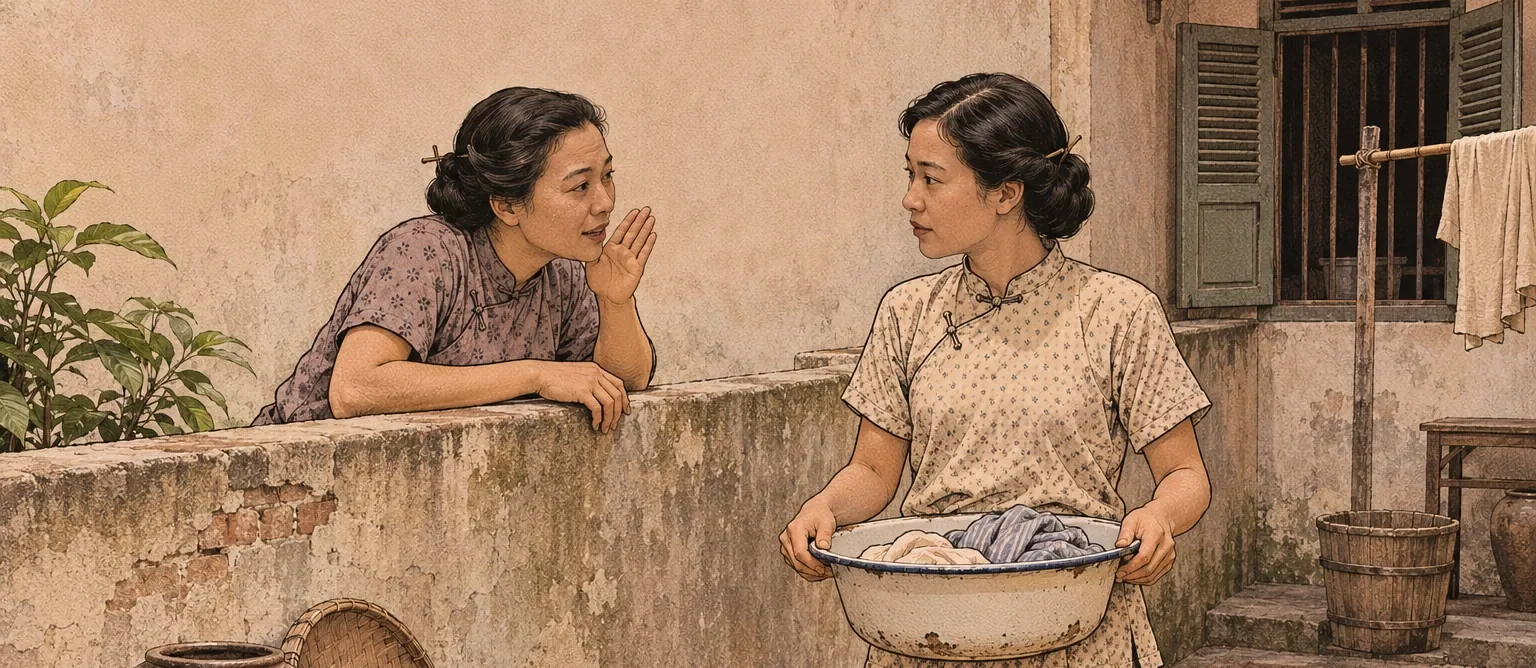
| Tan Mei Lin | In the uneasy weeks the street keeps watch and shares food door to door. | neighbours close ranks | 11% |
| Tan Mei Lin | A quiet year for the child: her name in the dust and a ball of rags. | quiet | 35% |
| Tan Cheng Huat | A quiet year: head down, working. | quiet | 29% |
| Tan Mei Lin | No serious illness for Mei Lin. | no | 98% |
| Tan Mei Lin | The surrender does not wipe out the family's savings in banana notes. | no | 58% |
| Tan Mei Lin | Mei Lin alive at the year's end. | no | 99% |
| Tan Cheng Huat | Cheng Huat is not seriously ill. | no | 95% |
| Tan Cheng Huat | Cheng Huat survives the year. | no | over 99% |
| Lim Swee Neo | Swee Neo is not seriously ill. | no | 93% |
| Lim Swee Neo | Swee Neo alive at the year's end. | no | over 99% |
| Tan Cheng Huat | Neither the last months nor the interregnum catch the household; nobody comes about the scarce goods. | none | 79% |
Chances are the simulation's model assumptions, not historical statistics.
Show as a table
| Year | Household a month | Peer median | Multiple |
|---|---|---|---|
| 1941 | $504 | $42 | 12.0× |
| 1942 | $82 | $42 | 2.0× |
| 1943 | $148 | $42 | 3.5× |
| 1944 | $204 | $42 | 4.9× |
| 1945 | $815 | $120 | 6.8× |
Nominal dollars; the engine's model estimate, the same figure as each issue's money line.
The chapter in prose
1945: The Quiet After
In 1945 the Japanese Occupation ends. Early in the year soldiers search the Tan house and frighten Lim Swee Neo, who is already weakened by hunger, and her sewing falls off. When Japan surrenders in August, the street comes together, and when the British return Tan Cheng Huat is among the first to trade again. Five-year-old Mei Lin has a quiet year, and all three of them are alive when it ends.
The Search
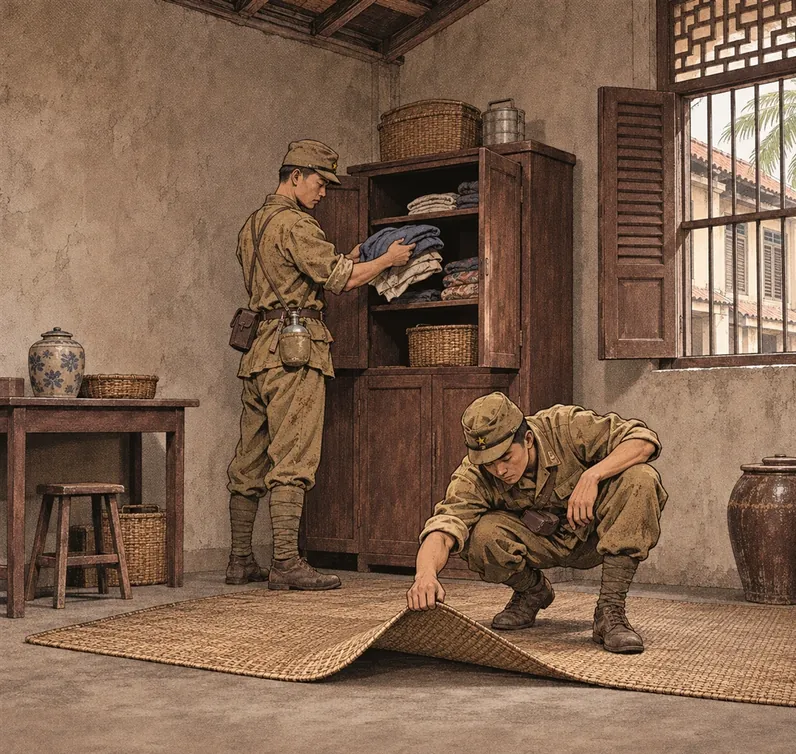
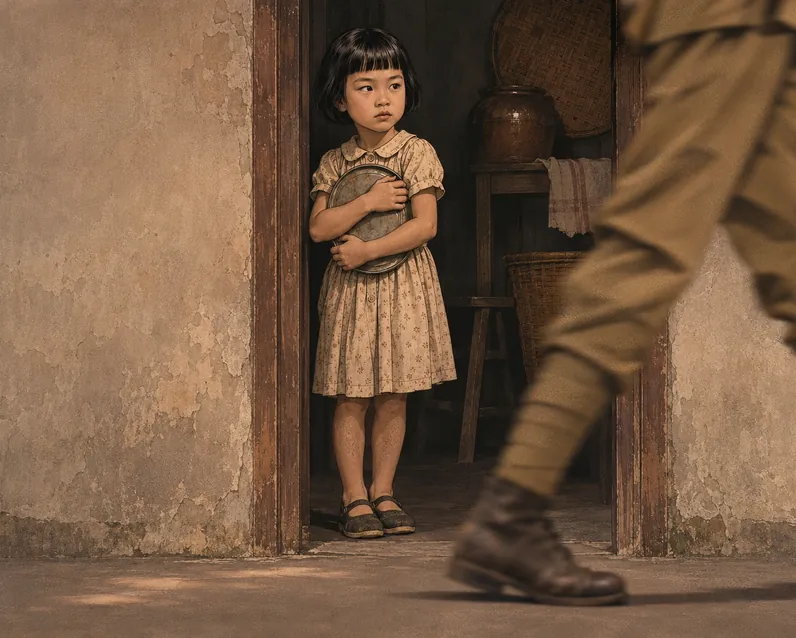
They came to the house in the early part of the year, at an hour when nobody expected anyone. Four of them, and a man who translated. They did not say what they were looking for. They went through the rooms one at a time, with the doors open, turning out the cupboards and lifting the mats, and they did not break anything that was not in the way.
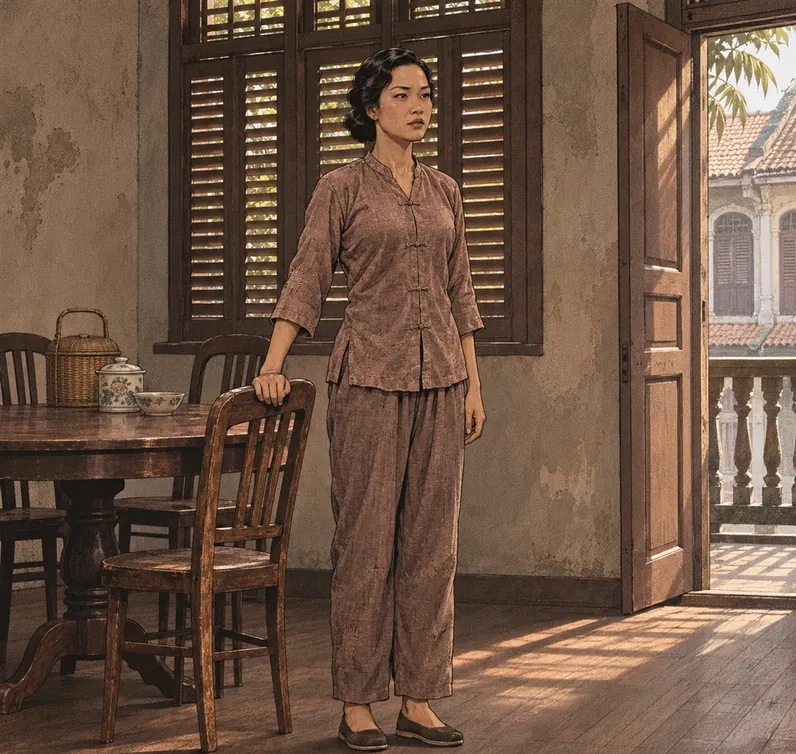
Swee Neo stood in the front room with her hand on the back of a chair, because she had stopped trusting her knees. One of them, a young man who might have been twenty, came back from the kitchen, looked at her for a while, and pushed her aside with his forearm, hard enough that she hit the wall. The translator said a sentence in Malay. She did not understand the words. She understood him.
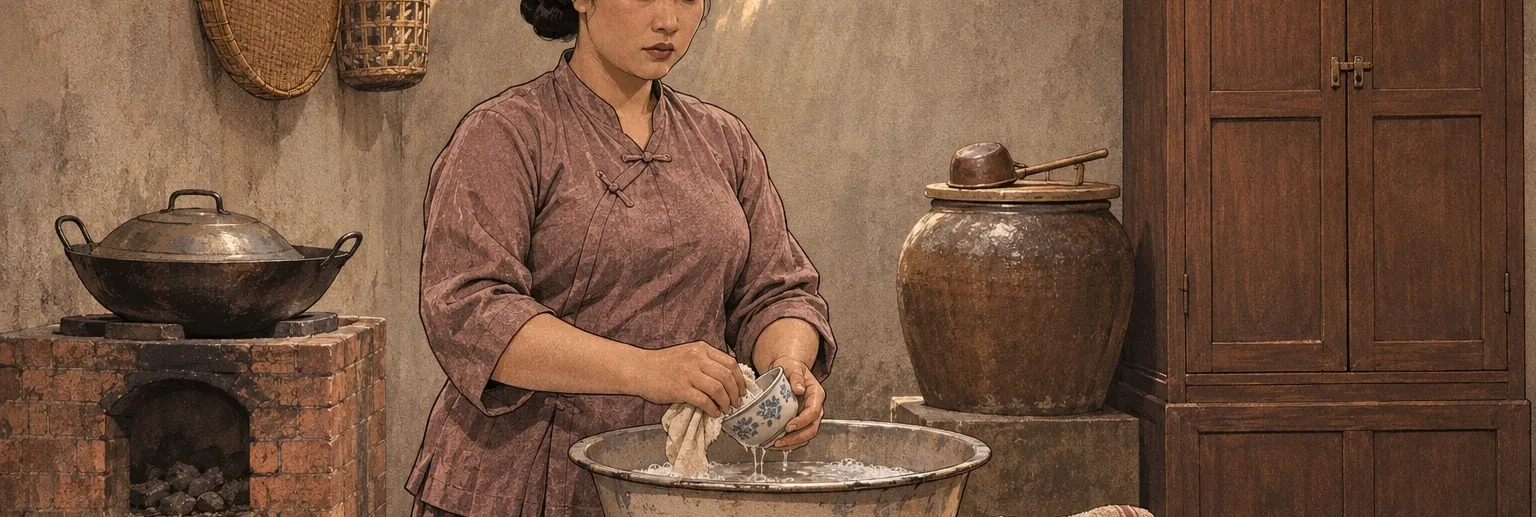
Mei Lin watched from the door of the back room, with the tin lid in both hands. Nobody looked at her. When they had gone, Swee Neo went on standing where she was for a good while. Then she went to the kitchen, and put the cupboards back, and washed the cups that had been moved.
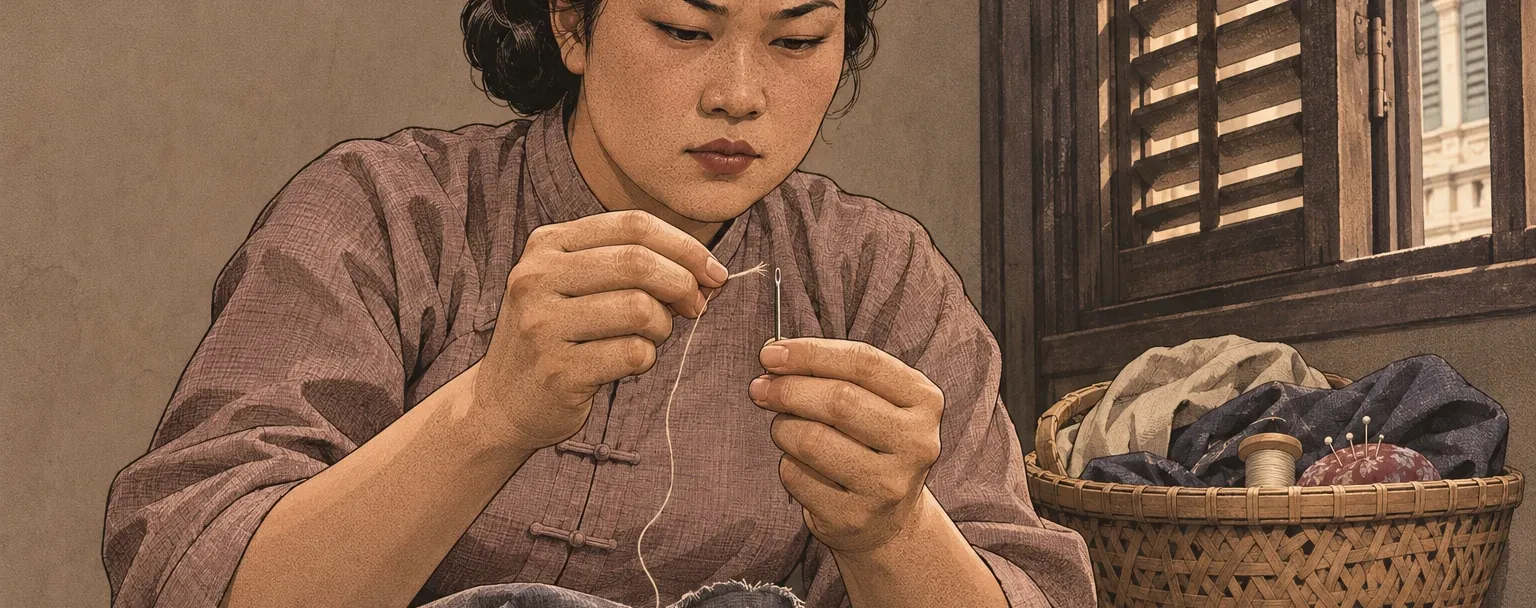
She sewed less after that. The women came with their hems and she took them, and then kept them a week past the day she had promised. Her hands were not steady, and she knew it, and so did they. It was a long time before the custom came back.
The Fifteenth of August
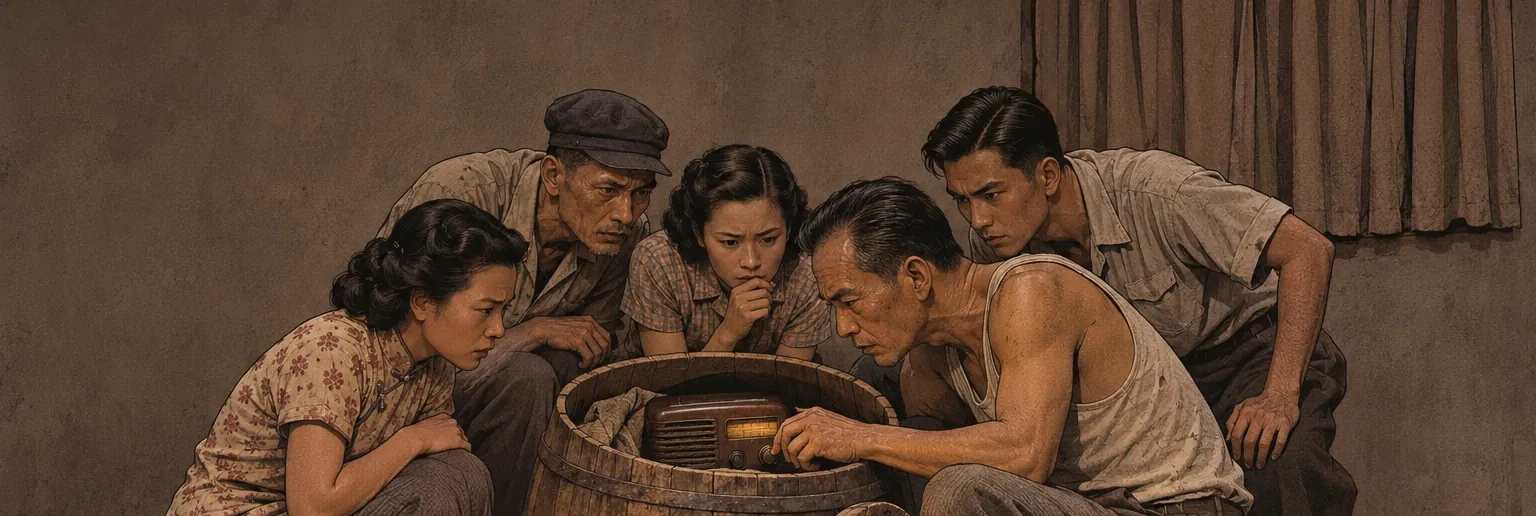
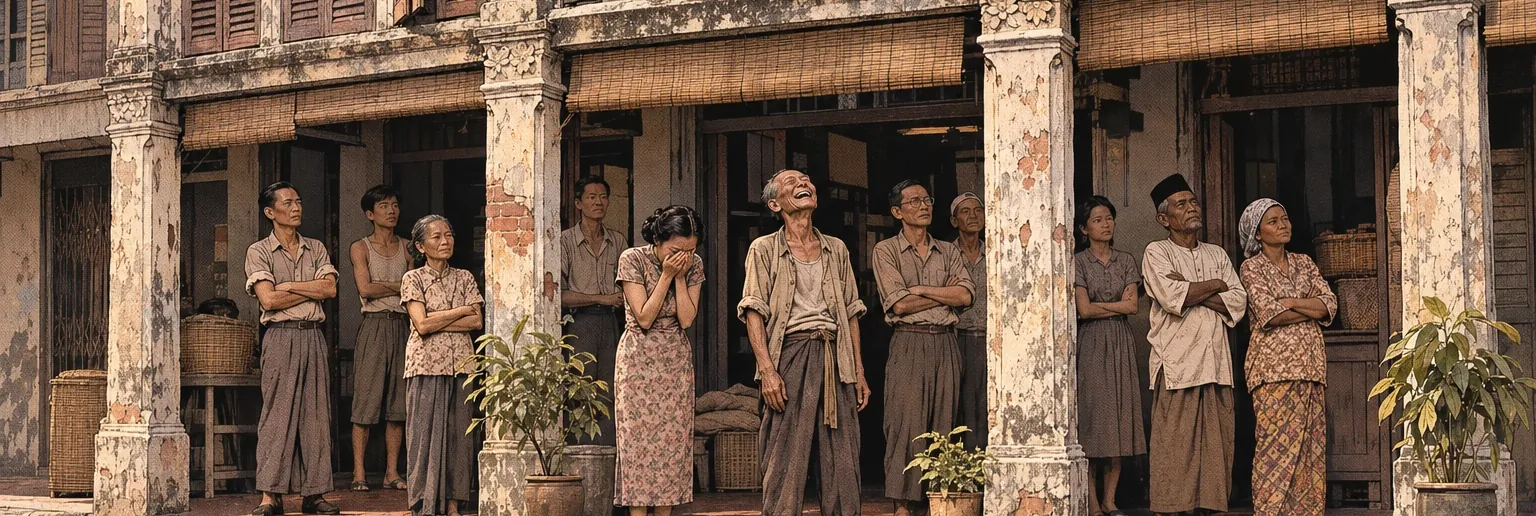
The news of the surrender came into the street through the neighbours, as news had been coming for nearly four years, by someone calling it softly across a wall. Japan had agreed to the Allies' terms. It was a radio that did it, in a back room with the curtains drawn, and a man who had never owned one before the war, and had hidden it in a barrel.
Some of the street wept. Some laughed. Most of them did what they had done for years: waited to see what would happen next. The British ships did not come into the harbour until September, and the weeks in between were uneasy ones, in which nobody was sure who the street now answered to.
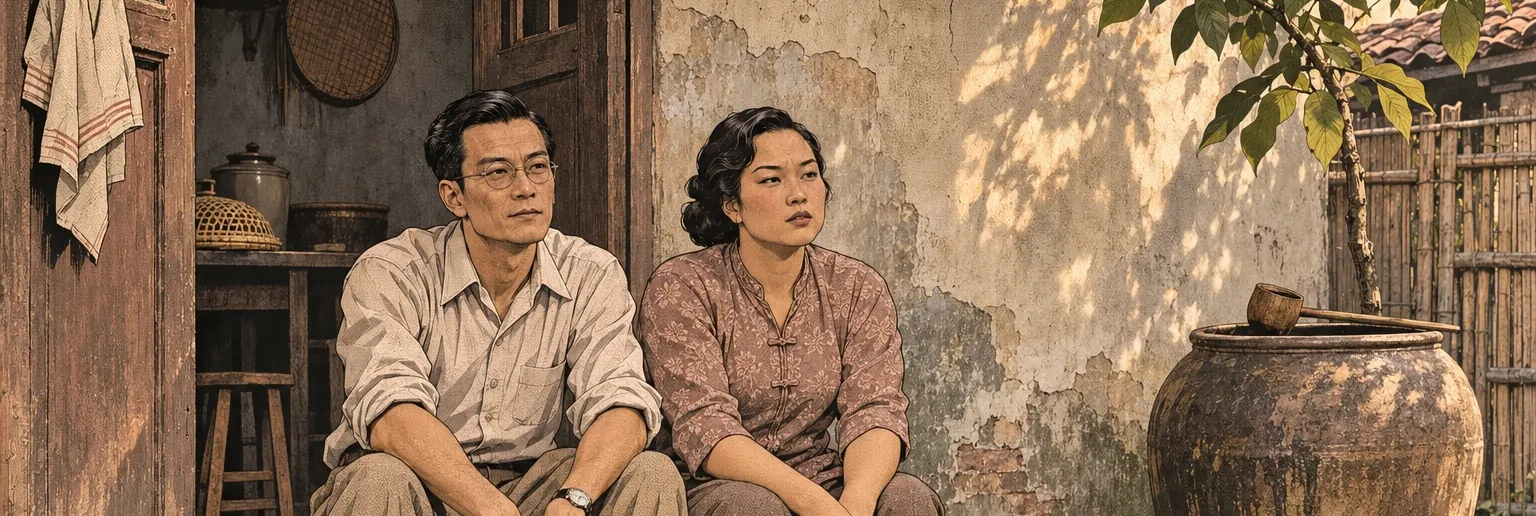
In the Tan house nobody said very much. Cheng Huat sat down on the back step, as he had done after the screening centre, and Swee Neo sat down beside him, which she had not done in years.
The Street Close Ranks
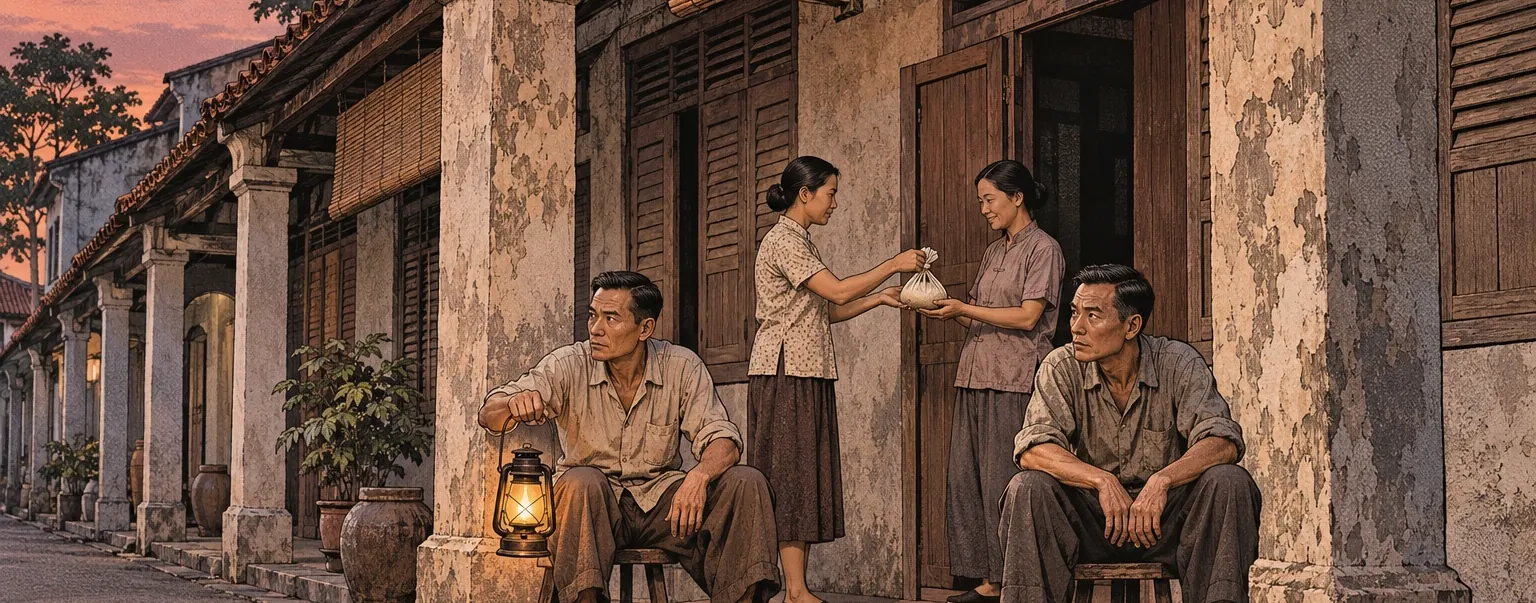
What the street did, in the end, was hold together. The neighbours kept a watch in turn at the head of the lane in the uneasy weeks, to see who came; they shared out what food there was, a handful at a time, door to door. Nobody had asked them to. They did it because they had been doing it for a year.
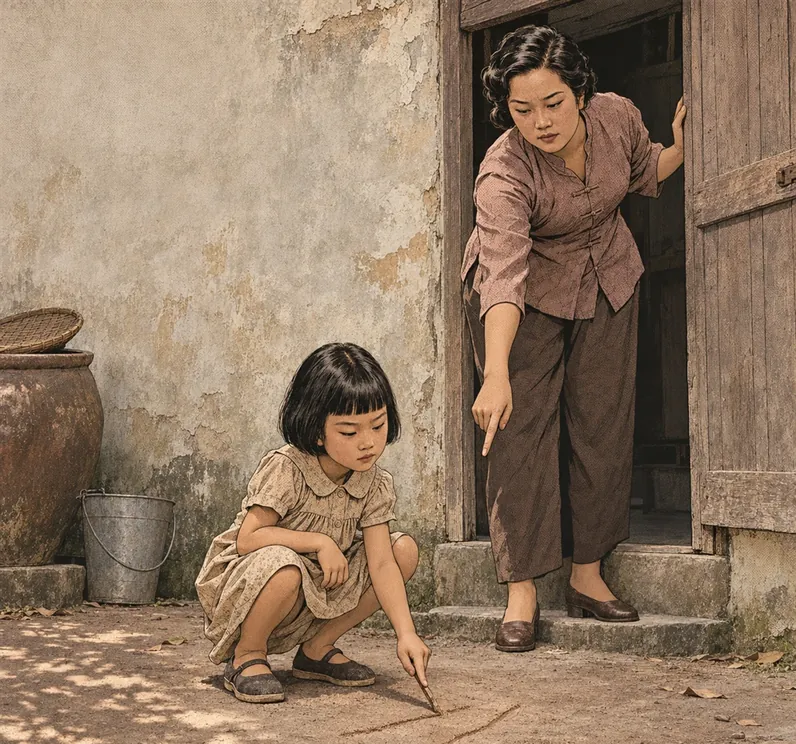
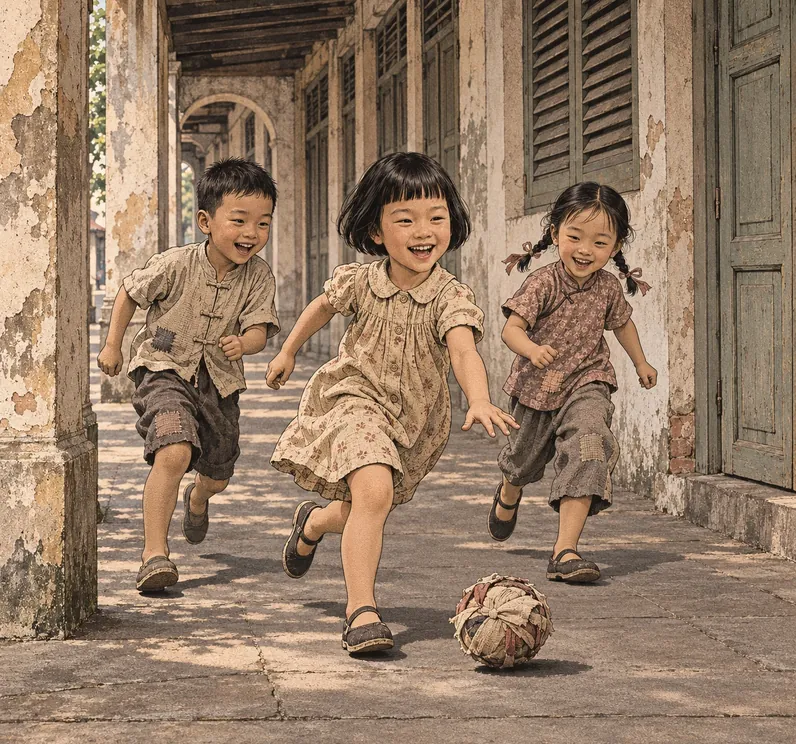
Mei Lin had a quiet year, as far as she could tell. She was five. She learned to write her own name, in Chinese, with a stick on the dust of the back yard, and her mother stood at the door and corrected her. She played with the children from the next house, who had a ball made of rags. She did not remember, afterwards, any of the grown-ups' fear. She remembered the ball.
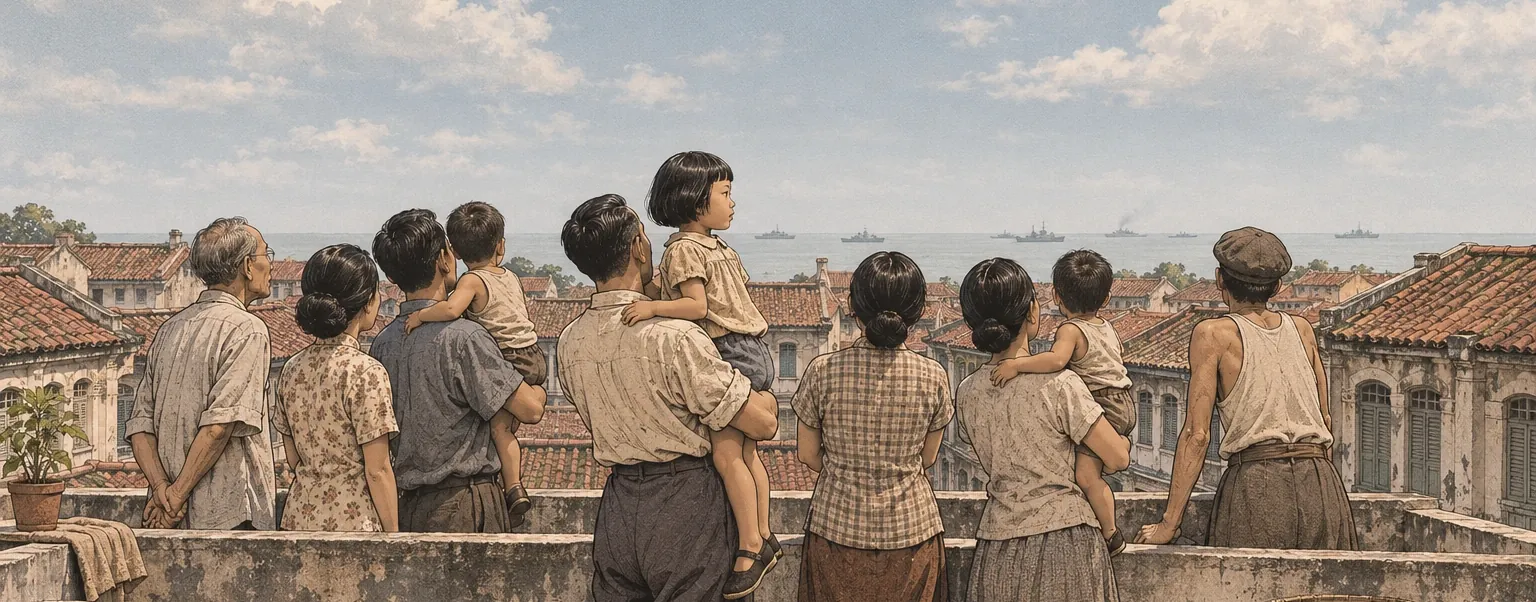
When the British ships came she was taken up onto the roof of the next house with the other children and held, so that she could see. She could not tell which ones were the ships, among the grey shapes on the horizon. She said later that they had been very far away, and that everyone had been very quiet.
First to Open
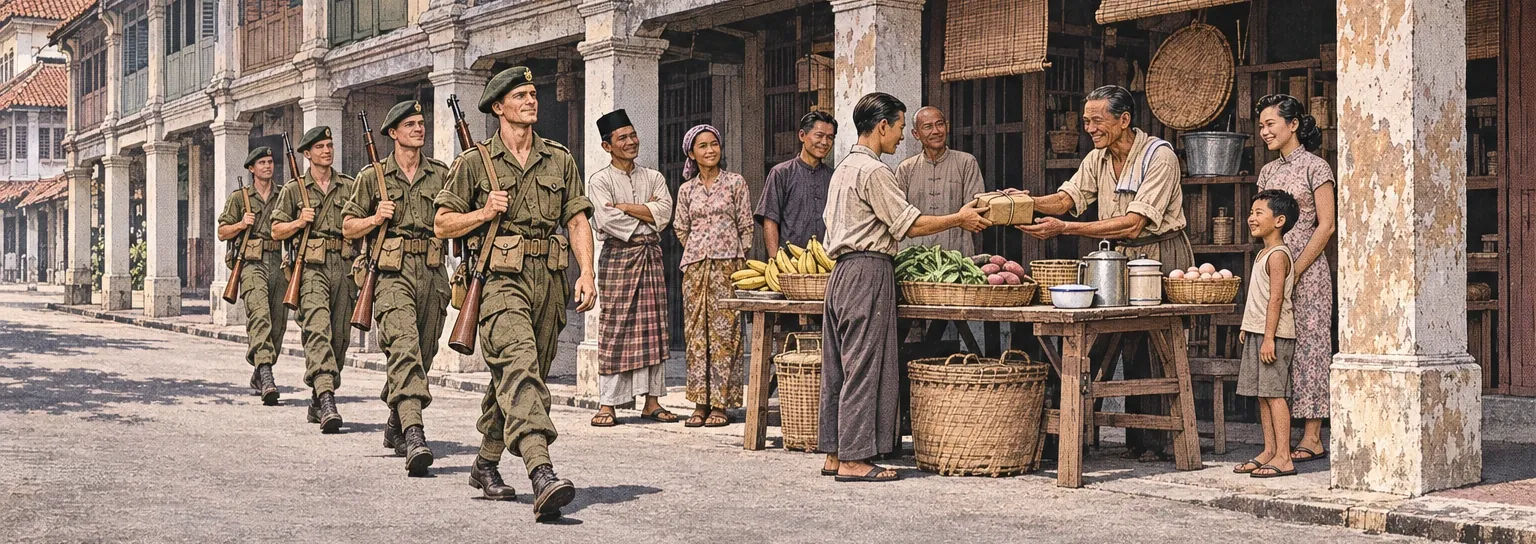
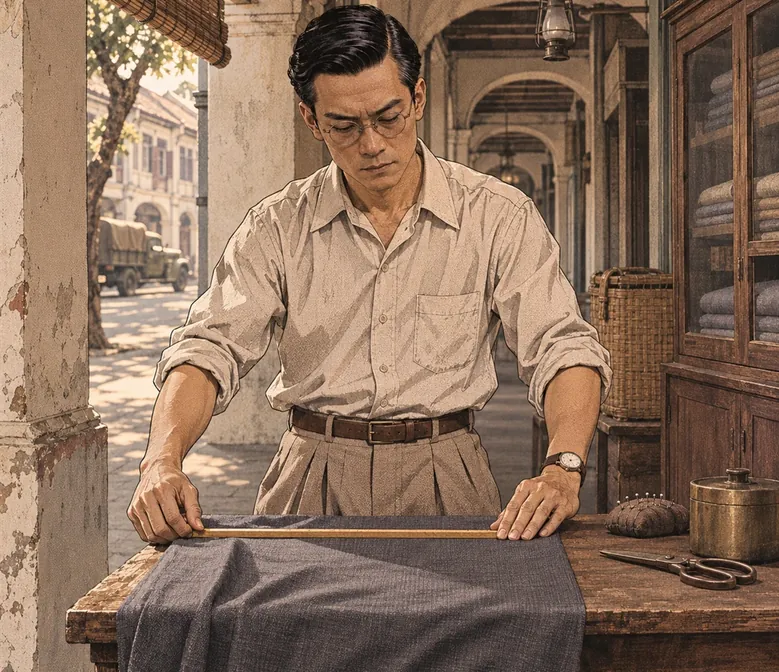
Cheng Huat did not believe in beginnings. He had learned over four years that a good month was usually followed by a bad one, and he was careful to say so when anyone in the family looked pleased. But that year he was among the first in the district to put a table out in front of the shop and sell something across it, a day after the first British soldiers had walked down the road.
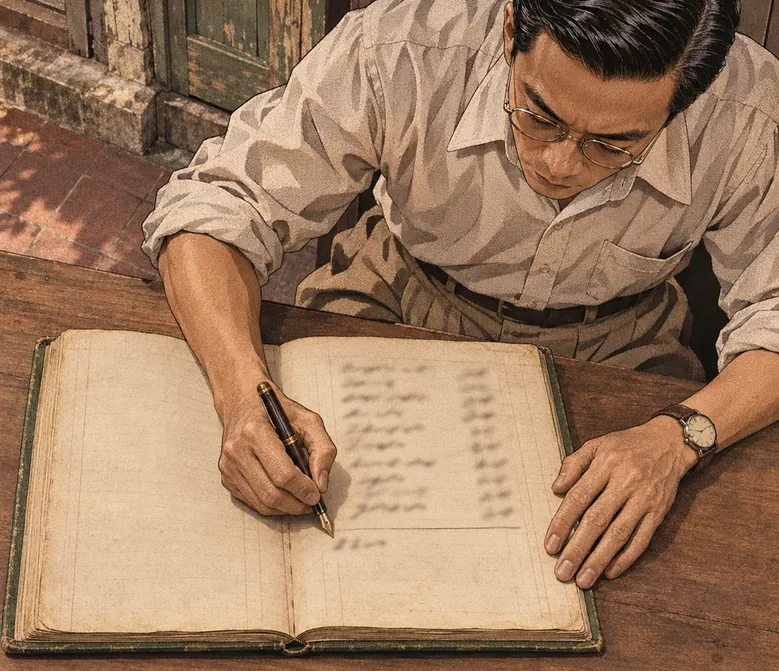
It was not much: what he had saved, what he could get from the first ships, in lots small enough to carry. He wrote each lot down. The ledger with the green cloth cover, which had sat at the bottom of a trunk since the lorry came to the godown in 1942, came out and was set on the table. He opened it to the last page, which had the date and the line beneath the empty column, and wrote the next date under it.
For the rest of the year he kept his head down and worked. Nobody came to the door about the other business, the scarce goods, and he did not ask himself why. He was careful not to.
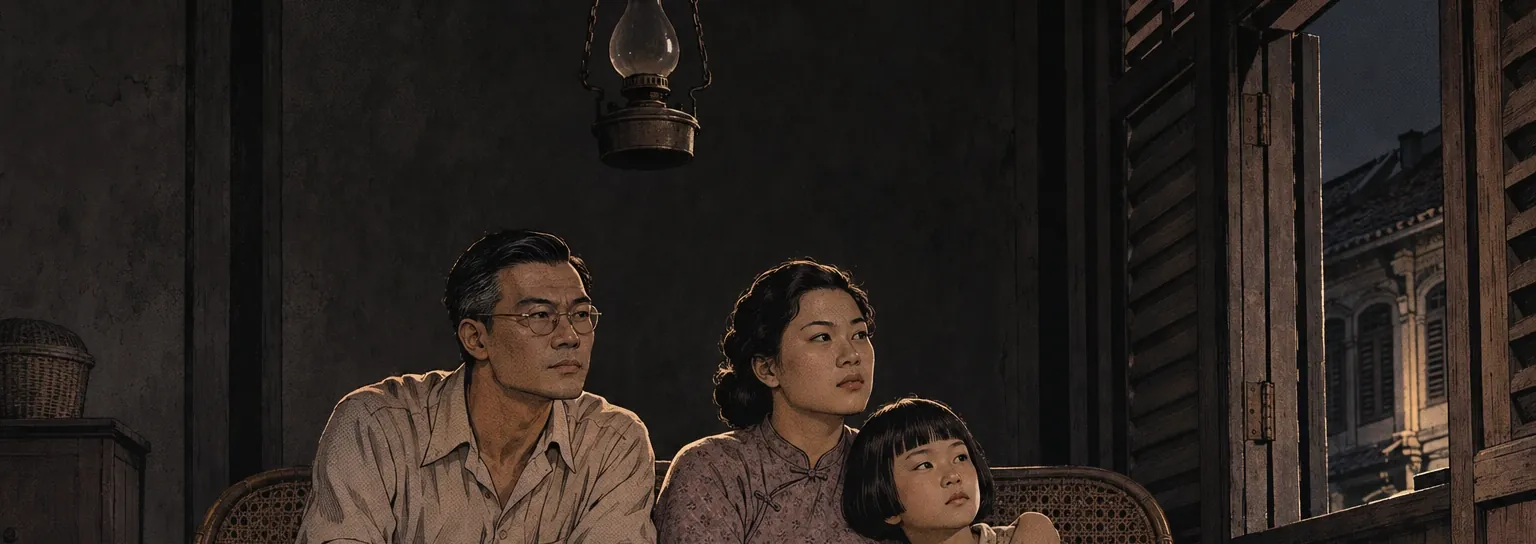
The shops were not full, and the money was not what it had been, but that night for the first time in three and a half years Cheng Huat left the lamp unlit in the front room, and the family sat in the dark and heard the street go by outside.