In 1955 Singapore votes in its first real election and goes through a year of strikes and riots, and none of it touches the Tan household. Fifteen-year-old Mei Lin no longer works at the counter. She keeps part of the firm's books at home and reads the English books her mother lets her order. Tan Cheng Huat is introduced to a buyer from one of the big European stores, and nothing comes of it. The firm neither grows nor loses. Lim Swee Neo sees the doctor in town and keeps the books as before. Nobody in the family is seriously ill.
A work of fiction set in real history. The characters are invented; the historical events are real and sourced.
In 1954 fourteen-year-old Mei Lin goes to the firm most mornings and works at the counter and the books. The lessons with the old clerk stop, since now she is simply working, and nothing more is done about her education. In May the Chinese middle school students clash with police, and the street talks of nothing else. One night she asks her father what he did in the war, and he answers only part of it. The firm does not grow, another customer's debt goes bad, and Tan Cheng Huat works longer hours than ever. A good doctor sees to them both when they need one. Lim Swee Neo takes over the firm's dealings with the bank, and has a small piece of good news. Nobody in the family is seriously ill.
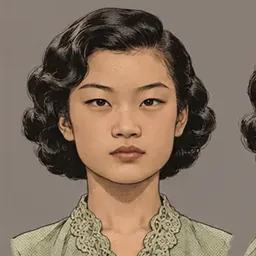
the daughter of the house, keeping part of the firm's books at home

her father, a cloth merchant
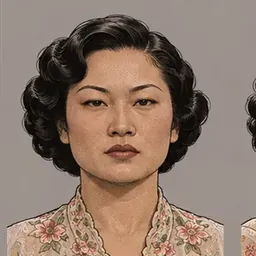
her mother, who keeps the firm's books
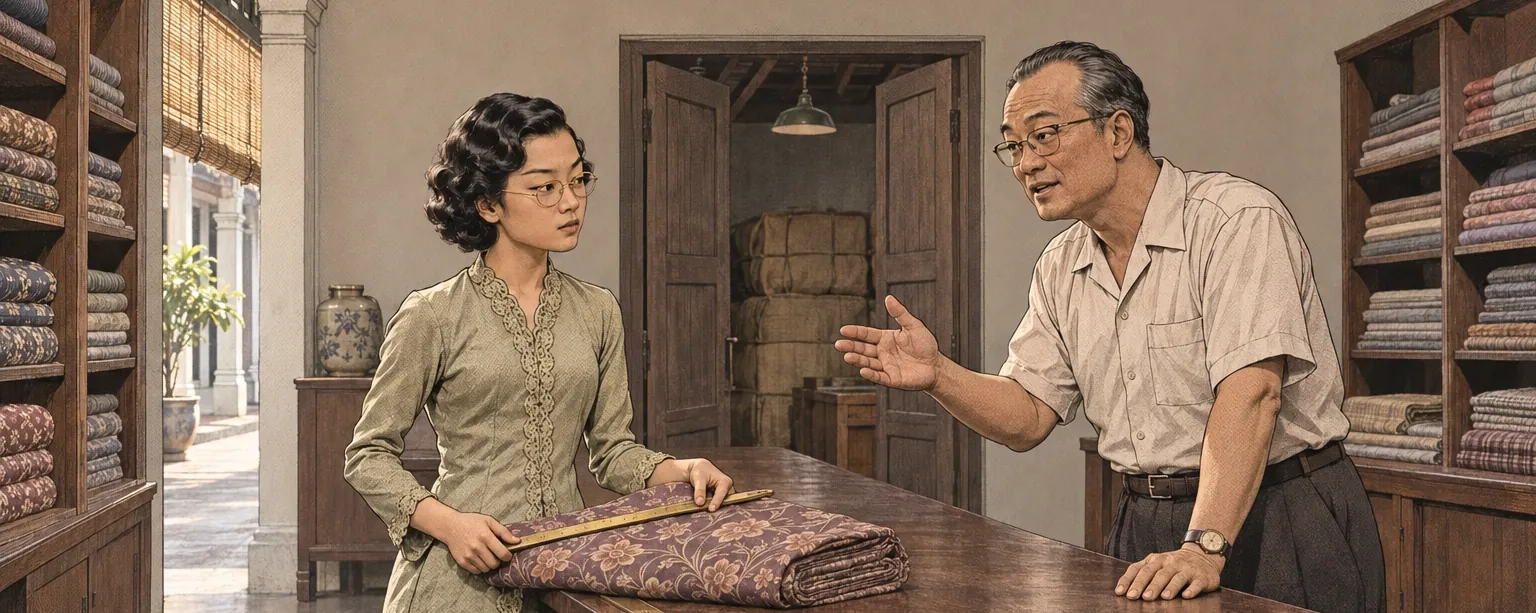
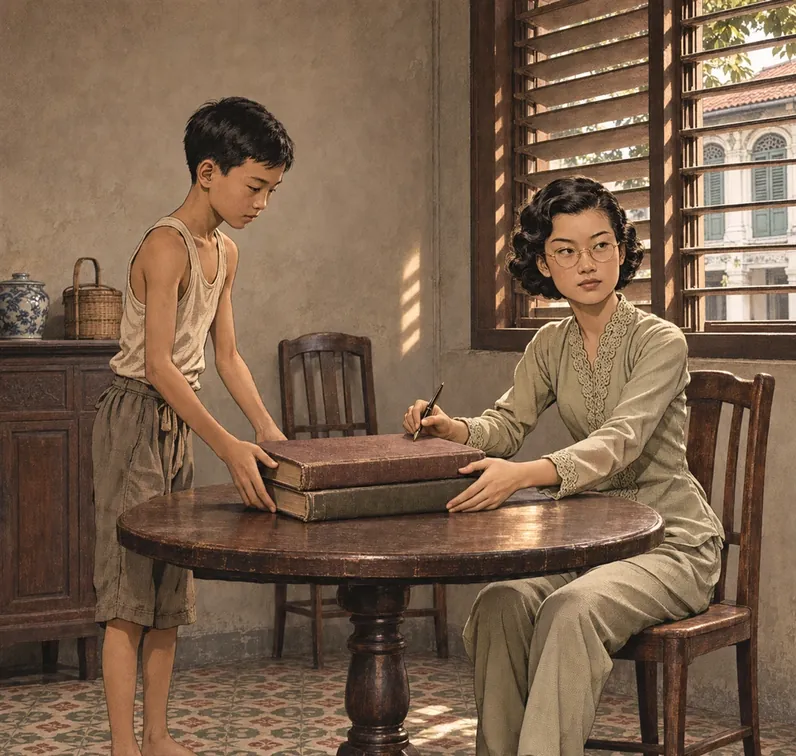
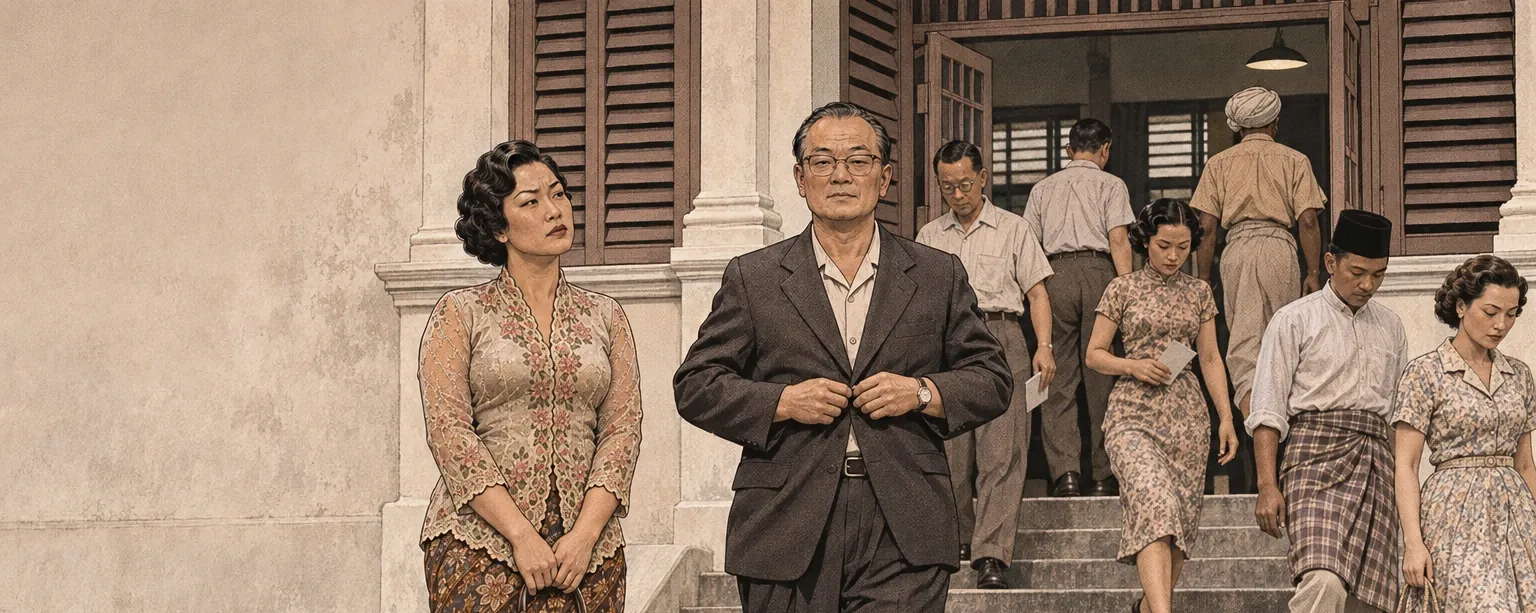
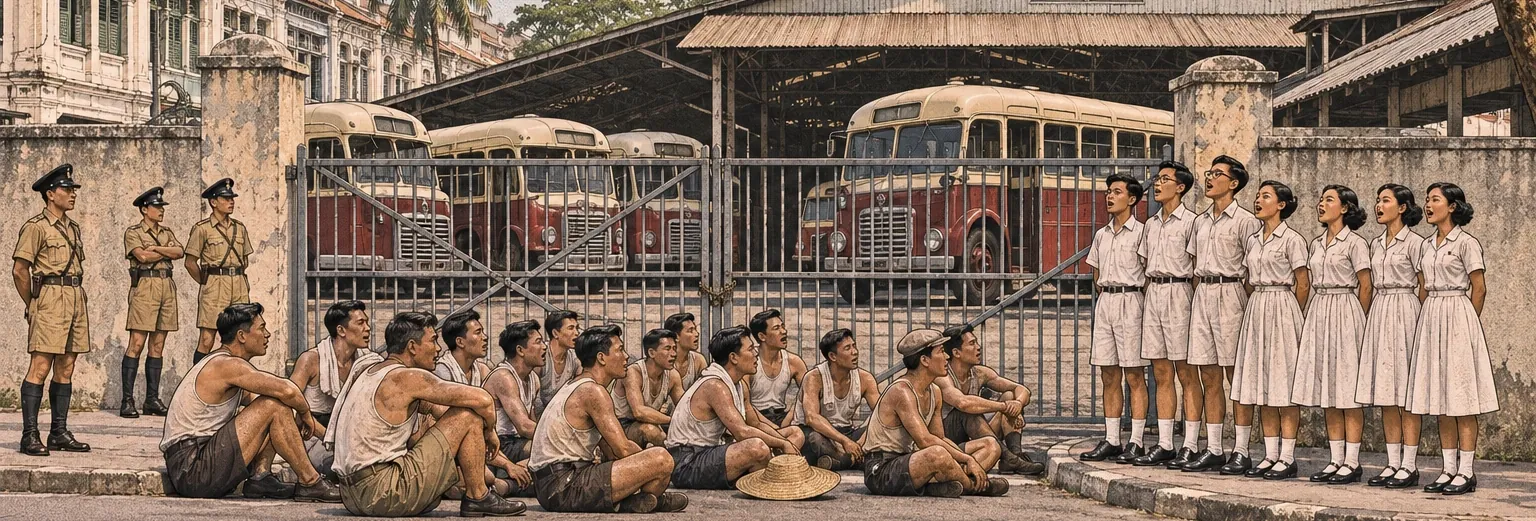
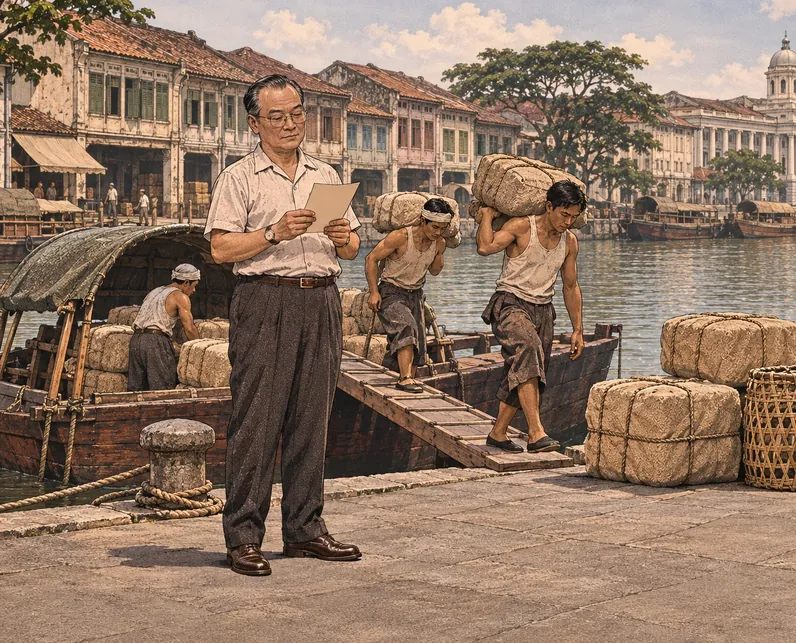
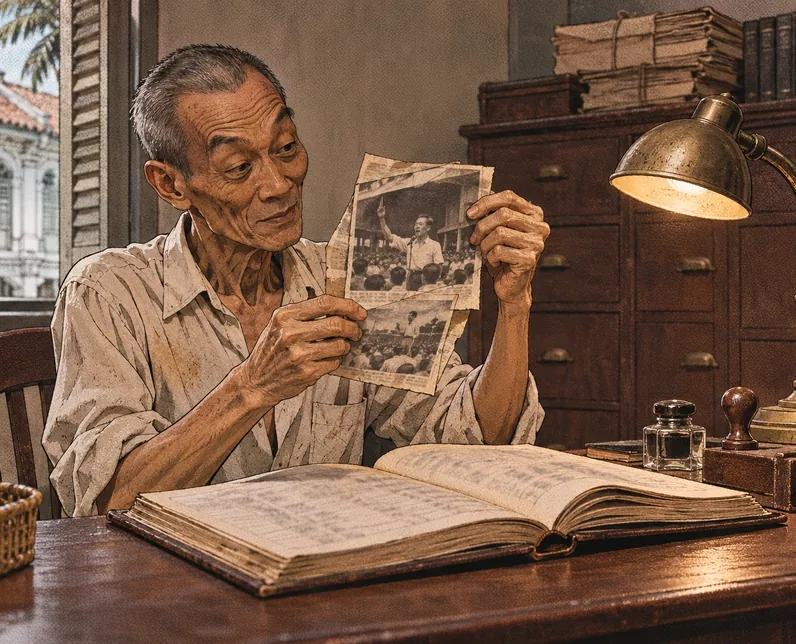

Singapore in 1955 holds its first largely elected Legislative Assembly election on 2 April under the Rendel constitution; David Marshall's Labour Front forms the government and Marshall becomes Chief Minister. The PAP wins three seats, Lee Kuan Yew among them.
Behind the dice How likely was each thing that happened? (Spoilers)
Nothing in The Dice Decides is chosen by a writer. Each person's year is a set of rolls, weighted by their stats and their times; the story is written afterwards to fit what the dice decided.
| Who | What the dice decided | Result | Chance |
|---|---|---|---|
| Tan Mei Lin | The purchase ledger and the creditors' book kept at home. | firm learning | 23% |
| Tan Mei Lin | Books ordered from London through Raffles Place. | books and lessons | 25% |
| Tan Cheng Huat | Lunch with a European store's buyer. | introduction | 15% |
| Tan Cheng Huat | The order goes to a firm in Telok Ayer Street. | no | 39% |
| Tan Mei Lin | Taken off the counter; not paid, not called work. | none | 26% |
| Tan Cheng Huat | The strikes do not reach the firm. | no | 82% |
| Tan Mei Lin | The election and the year of strikes pass them by. | quiet | 17% |
| Tan Cheng Huat | The firm neither grows nor loses. | no | 51% |
| Lim Swee Neo | She keeps the books and the bank as before. | no | 49% |
| Lim Swee Neo | She sees the doctor before the cough gets worse. | good doctor | 15% |
| Tan Cheng Huat | No customer fails. | no | 86% |
| Tan Mei Lin | A quiet year at home. | quiet | 25% |
| Tan Cheng Huat | A steady year. | quiet | 31% |
| Lim Swee Neo | A steady year. | quiet | 28% |
| Tan Mei Lin | No serious illness for Mei Lin. | no | over 99% |
| Tan Mei Lin | The house is not pinched this year. | no | 91% |
| Tan Mei Lin | Mei Lin survives the year. | no | over 99% |
| Tan Cheng Huat | No serious illness for Cheng Huat. | no | 97% |
| Tan Cheng Huat | Cheng Huat survives the year. | no | over 99% |
| Lim Swee Neo | No serious illness for Swee Neo. | no | 96% |
| Lim Swee Neo | Swee Neo survives the year. | no | over 99% |
Chances are the simulation's model assumptions, not historical statistics.
Show as a table
| Year | Household a month | Peer median | Multiple |
|---|---|---|---|
| 1941 | $504 | $42 | 12.0× |
| 1942 | $82 | $42 | 2.0× |
| 1943 | $148 | $42 | 3.5× |
| 1944 | $204 | $42 | 4.9× |
| 1945 | $815 | $120 | 6.8× |
| 1946 | $1,114 | $150 | 7.4× |
| 1947 | $1,094 | $155 | 7.1× |
| 1948 | $1,072 | $160 | 6.7× |
| 1949 | $1,051 | $165 | 6.4× |
| 1950 | $1,691 | $170 | 9.9× |
| 1951 | $1,753 | $175 | 10.0× |
| 1952 | $1,901 | $180 | 10.6× |
| 1953 | $1,841 | $185 | 10.0× |
| 1954 | $1,791 | $190 | 9.4× |
| 1955 | $1,838 | $195 | 9.4× |
Nominal dollars; the engine's model estimate, the same figure as each issue's money line.
The chapter in prose
1955: The Year of Strikes
In 1955 Singapore votes in its first real election and goes through a year of strikes and riots, and none of it touches the Tan household. Fifteen-year-old Mei Lin no longer works at the counter. She keeps part of the firm's books at home and reads the English books her mother lets her order. Tan Cheng Huat is introduced to a buyer from one of the big European stores, and nothing comes of it. The firm neither grows nor loses. Lim Swee Neo sees the doctor in town and keeps the books as before. Nobody in the family is seriously ill.
Books at Home
In the new year her father took her off the counter. A girl of fifteen, he said, should not be measuring cloth for strangers. He said it as if it were a kindness, and perhaps he meant it as one.
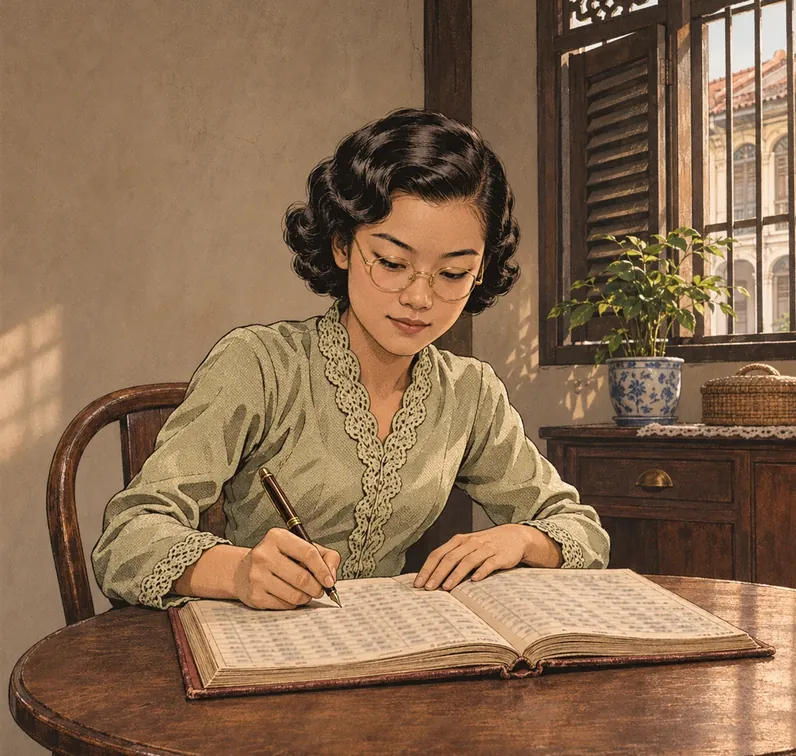
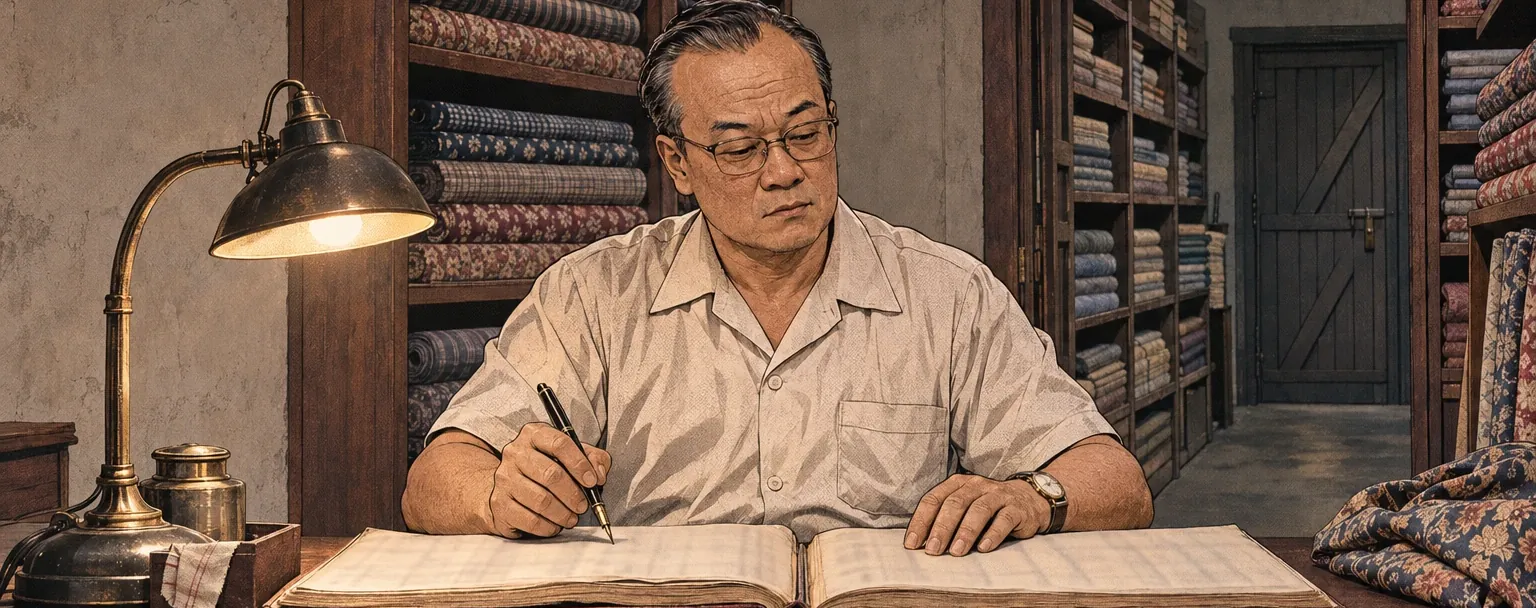
The books came home instead. Twice a week the old clerk sent a boy round with the purchase ledger and the creditors' book, and Mei Lin kept them at the table in the front room in the afternoons, in the neat small figures he had taught her, and sent them back. She was not paid and it was not called work. It was the part of the firm that her father did not like to look at, and she found that she liked it very much.
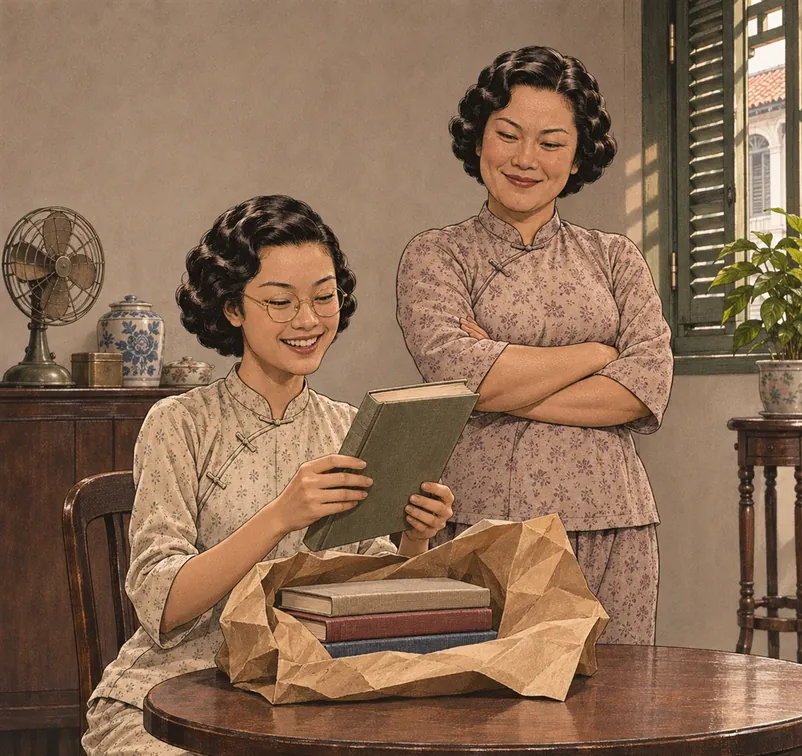
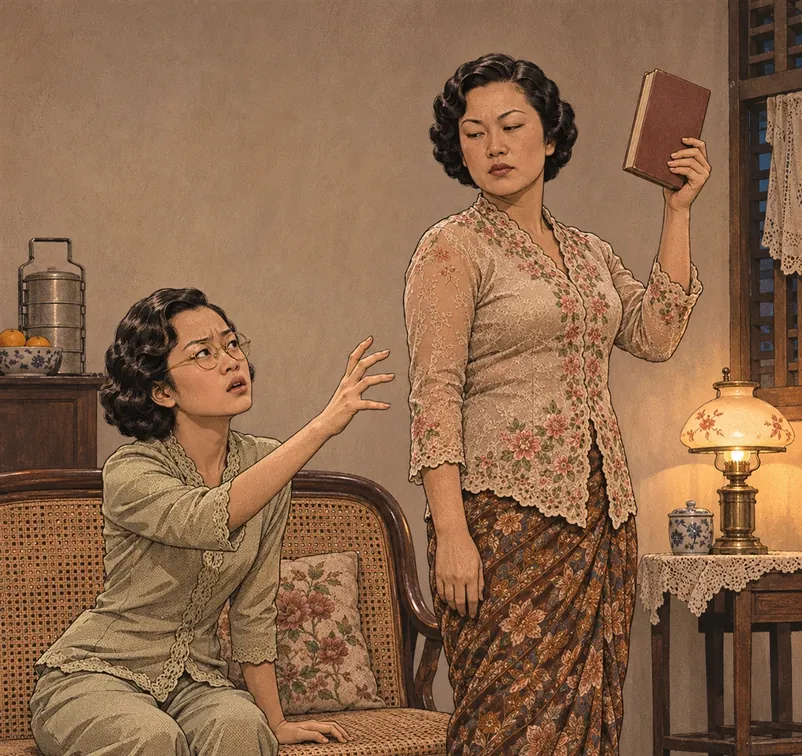
Her mother let her order books. There was a bookseller in Raffles Place who would send to London, and that year Mei Lin had from him, one parcel at a time, an English grammar, a set of the Brontës, a book on double-entry accounts written for clerks in the colonies, and a novel that her mother took away after one chapter and gave back a week later without comment. Otherwise it was a quiet year at home. The aunties talked; nothing came of it.
The Year of Strikes
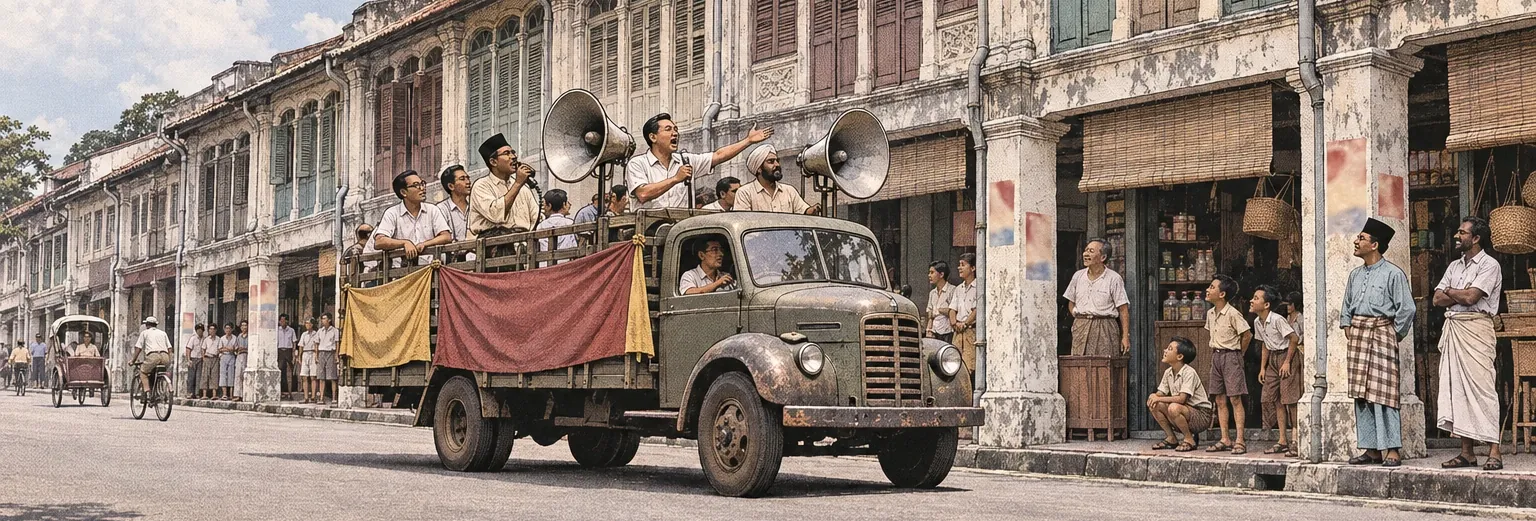
In April there was an election, the first in which most of the seats were filled by votes, and lorries with loudspeakers went up and down the street for a month. Cheng Huat voted and would not say for whom. In May the bus strike at Hock Lee became a riot, and four people died, and after that the strikes came one after another all year: dockers, bus drivers, shop assistants, factory hands, with students from the Chinese schools singing outside the factory gates.
For once, none of it came to their door. The firm's goods came off the wharf when they were due. Nobody at the firm struck. The household read about the year in the newspapers, and Mei Lin cut out the photographs of the new Chief Minister, a lawyer who made his speeches with his sleeves rolled up, and kept them in the back of the creditors' book until the clerk found them.
An Introduction
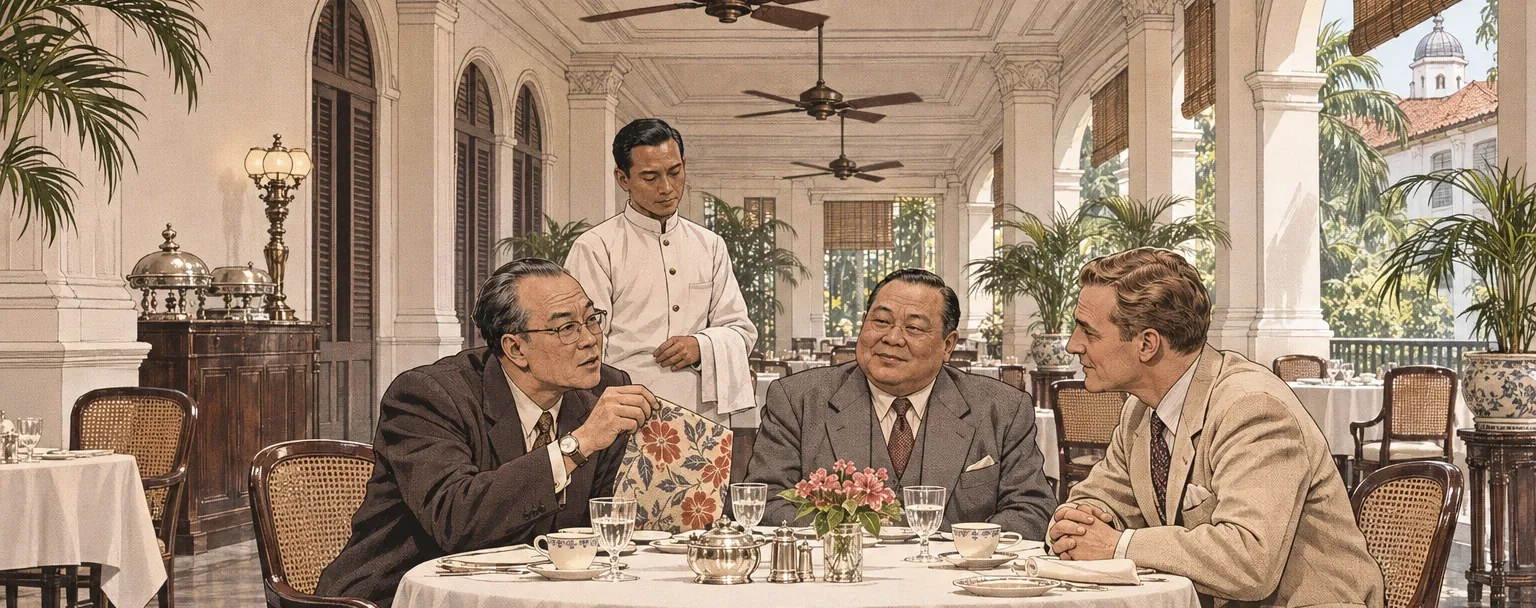
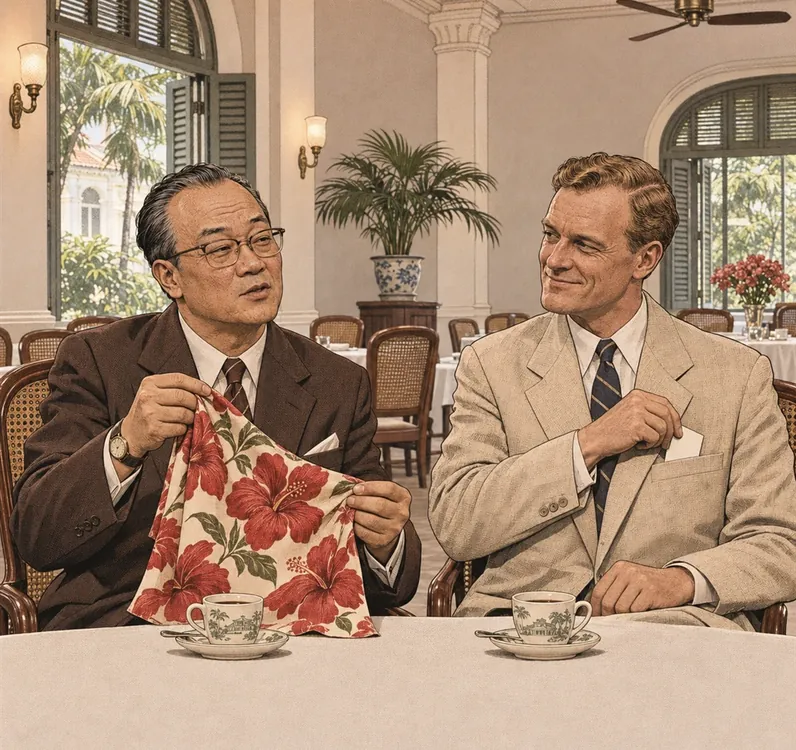
In the spring a man from the clan association took Cheng Huat to lunch with the piece-goods buyer of one of the big European stores in Raffles Place, who was looking for a Chinese firm to supply cotton prints. It was the kind of introduction that could have made the firm. Cheng Huat went in his good suit and talked too long about the quality of his cloth and not at all about the price, and the buyer was polite and took his card, and the order went to a firm in Telok Ayer Street.
Nothing else went wrong. No customer failed, no goods were held up, and the firm did exactly what it had done for four years. Swee Neo kept the books and dealt with the bank. In the autumn she had a cough that she did not like the sound of, and went to the doctor in town before it got worse rather than after, which was new; it cleared in a fortnight. For both of them it was a quiet year, and after the two before it, neither complained.
At the end of the year the firm's figures came out within a few dollars of the year before, and Cheng Huat, who had been dreading them, did not know whether to be relieved.