In 1958 Lim Swee Neo finally wins the argument she lost in 1952, and at eighteen Mei Lin goes back to school. The bursar who has been lending her books finds her a place at her own mission school, one of the best girls' schools on the island, in a class of girls three and four years younger. A go-between brings a match, and her parents send it away. Her old friends drift into work and marriage. The firm grows for a third year, though a fourth customer's debt goes bad and a leak in the godown spoils a consignment. Swee Neo wins another account and borrows from her brother, on easy terms, to cover the gap. Tan Cheng Huat is asked onto the piece-goods merchants' association committee. Nobody in the family is seriously ill.
A work of fiction set in real history. The characters are invented; the historical events are real and sourced.
In 1957 the Asian flu reaches Singapore in May, and Mei Lin and her mother both catch it. Lim Swee Neo has the best doctor money can buy, and both are up within a week or two. The firm loses weeks of trade while the town is in bed, but it still ends the year larger. Swee Neo wins a second institutional account, and she takes the running of the household back into her own hands. Tan Cheng Huat escapes the flu and puts on weight. An introduction to a buyer from Kuala Lumpur comes to nothing. Seventeen-year-old Mei Lin keeps the books at home and goes on with her lessons. The school bursar her mother deals with begins to lend her books. The bookseller's assistant is still polite. Nobody in the family is seriously ill beyond the flu.
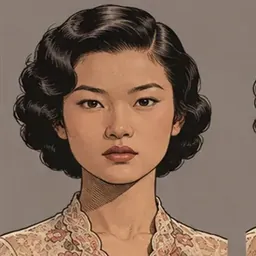
the daughter of the house, going back to school

her father, a cloth merchant
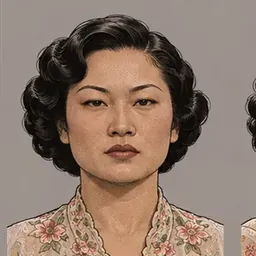
her mother, who runs the firm's accounts with institutions and the bank
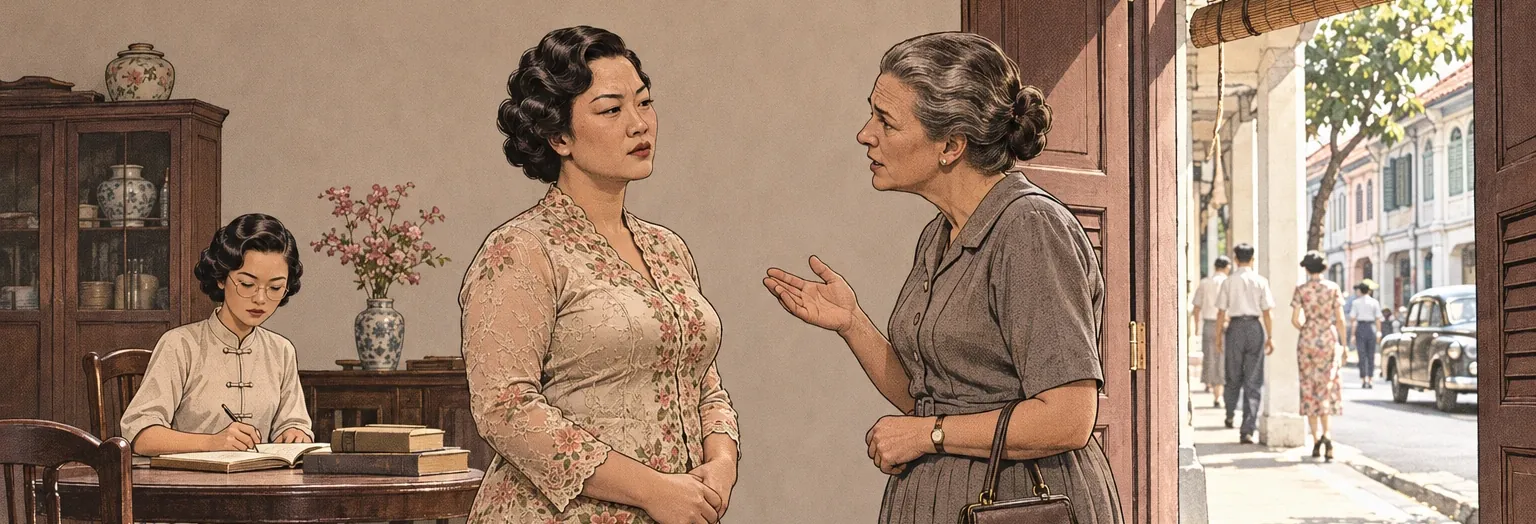
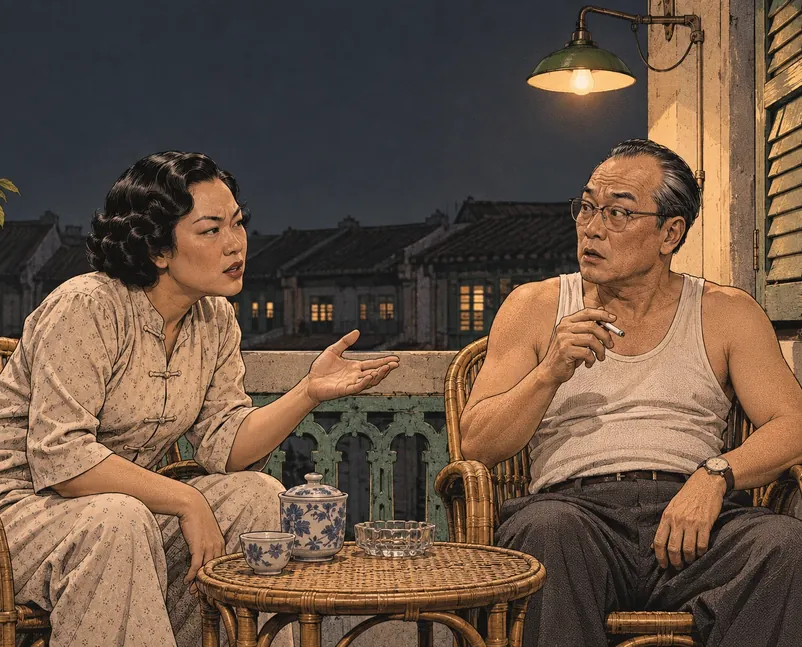

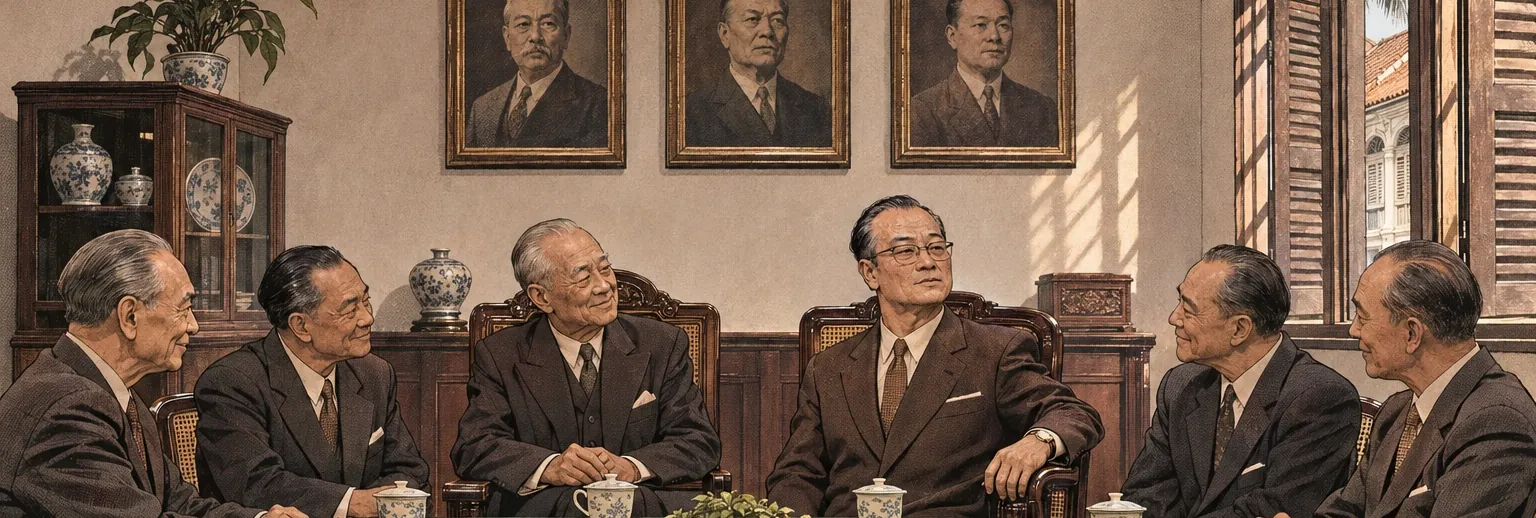
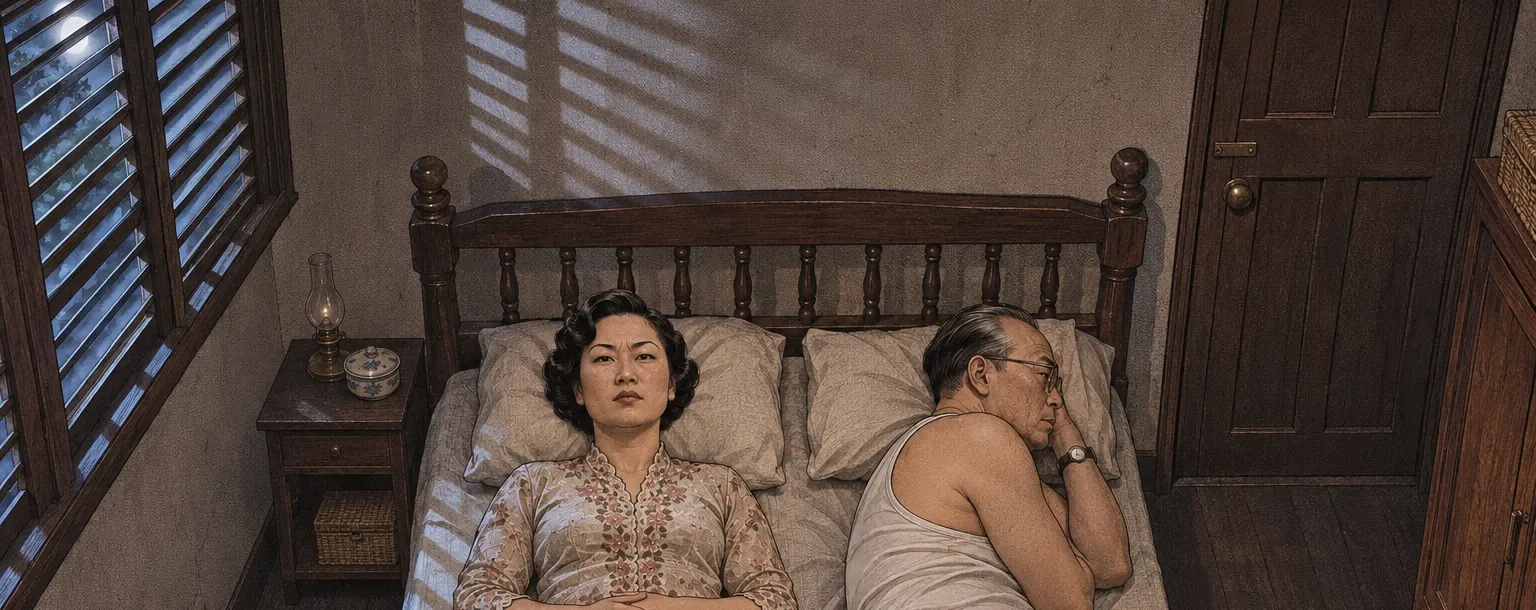
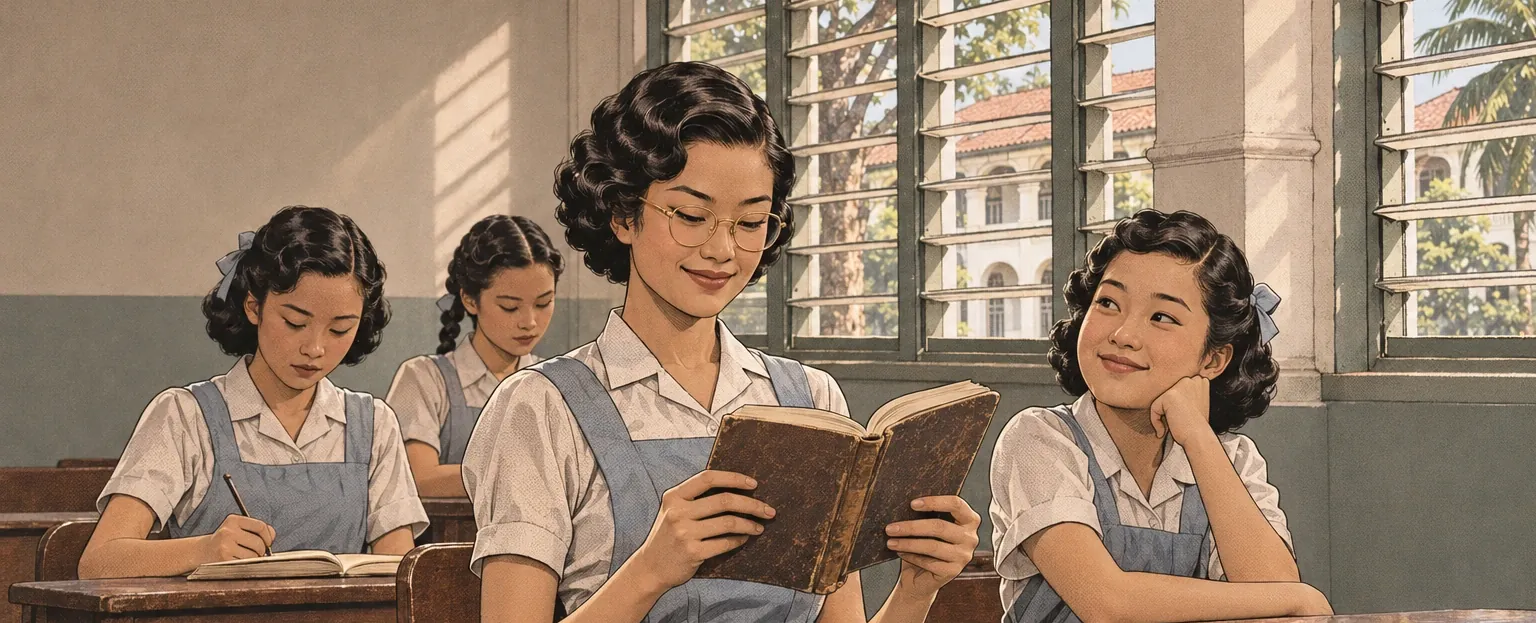
Singapore in 1958 is a Crown Colony with an elected Chief Minister, Lim Yew Hock. The third round of constitutional talks in London, from mid-May, confirms the 1957 agreement for a self-governing State of Singapore.
Behind the dice How likely was each thing that happened? (Spoilers)
Nothing in The Dice Decides is chosen by a writer. Each person's year is a set of rolls, weighted by their stats and their times; the story is written afterwards to fit what the dice decided.
| Who | What the dice decided | Result | Chance |
|---|---|---|---|
| Tan Mei Lin | Swee Neo wins the argument. | back to school | 1% |
| Tan Mei Lin | A place at one of the best girls' schools on the island. | picked | 74% |
| Tan Cheng Huat | The firm grows for a third year. | yes | 44% |
| Tan Cheng Huat | A seat on the merchants' association committee. | standing | 11% |
| Lim Swee Neo | A third account, for a hospital's linen. | yes | 46% |
| Lim Swee Neo | A loan from her brother in rubber. | kin loan | 14% |
| Tan Cheng Huat | The Geylang draper disappears. | yes | 14% |
| Tan Mei Lin | The bursar's word at the door. | family friend | 15% |
| Tan Mei Lin | A proposal from a rice merchant in Boat Quay. | go between | 34% |
| Tan Mei Lin | Her parents send the match away. | no | 46% |
| Tan Mei Lin | The books at home in the evenings. | as before | 40% |
| Tan Cheng Huat | Trade holds up despite the slack year. | no | 76% |
| Tan Mei Lin | Her old friends drift into work and marriage. | loses friends | 7% |
| Tan Mei Lin | Her father reads the London agreement aloud, twice. | london agreement | 12% |
| Tan Cheng Huat | The godown leak spoils the white drill. | bad news | 8% |
| Lim Swee Neo | The old dream of the war. | nightmare | 5% |
| Tan Mei Lin | No serious illness for Mei Lin. | no | over 99% |
| Tan Mei Lin | The house is not pinched this year. | no | 91% |
| Tan Mei Lin | No new work for Mei Lin outside the house. | no | 69% |
| Tan Mei Lin | No new connection made. | no | 82% |
| Tan Mei Lin | Mei Lin survives the year. | no | over 99% |
| Tan Cheng Huat | No serious illness for Cheng Huat. | no | 97% |
| Tan Cheng Huat | Cheng Huat survives the year. | no | over 99% |
| Lim Swee Neo | No serious illness for Swee Neo. | no | 96% |
| Lim Swee Neo | Swee Neo survives the year. | no | over 99% |
Chances are the simulation's model assumptions, not historical statistics.
Show as a table
| Year | Household a month | Peer median | Multiple |
|---|---|---|---|
| 1941 | $504 | $42 | 12.0× |
| 1942 | $82 | $42 | 2.0× |
| 1943 | $148 | $42 | 3.5× |
| 1944 | $204 | $42 | 4.9× |
| 1945 | $815 | $120 | 6.8× |
| 1946 | $1,114 | $150 | 7.4× |
| 1947 | $1,094 | $155 | 7.1× |
| 1948 | $1,072 | $160 | 6.7× |
| 1949 | $1,051 | $165 | 6.4× |
| 1950 | $1,691 | $170 | 9.9× |
| 1951 | $1,753 | $175 | 10.0× |
| 1952 | $1,901 | $180 | 10.6× |
| 1953 | $1,841 | $185 | 10.0× |
| 1954 | $1,791 | $190 | 9.4× |
| 1955 | $1,838 | $195 | 9.4× |
| 1956 | $2,083 | $200 | 10.4× |
| 1957 | $2,298 | $205 | 11.2× |
| 1958 | $2,390 | $210 | 11.4× |
Nominal dollars; the engine's model estimate, the same figure as each issue's money line.
The chapter in prose
1958: The Oldest Girl in the Class
In 1958 Lim Swee Neo finally wins the argument she lost in 1952, and at eighteen Mei Lin goes back to school. The bursar who has been lending her books finds her a place at her own mission school, one of the best girls' schools on the island, in a class of girls three and four years younger. A go-between brings a match, and her parents send it away. Her old friends drift into work and marriage. The firm grows for a third year, though a fourth customer's debt goes bad and a leak in the godown spoils a consignment. Swee Neo wins another account and borrows from her brother, on easy terms, to cover the gap. Tan Cheng Huat is asked onto the piece-goods merchants' association committee. Nobody in the family is seriously ill.
The Argument
It was the bursar who started it, though she never knew she had. In March she came to settle the school's account and stayed to talk to Mei Lin about the history of England, and afterwards, at the door, she said to Swee Neo that it was a great pity about the girl's schooling, and that if the family ever thought of it, there was a class at her own school for girls who had lost years in the war and were sitting the School Certificate late.
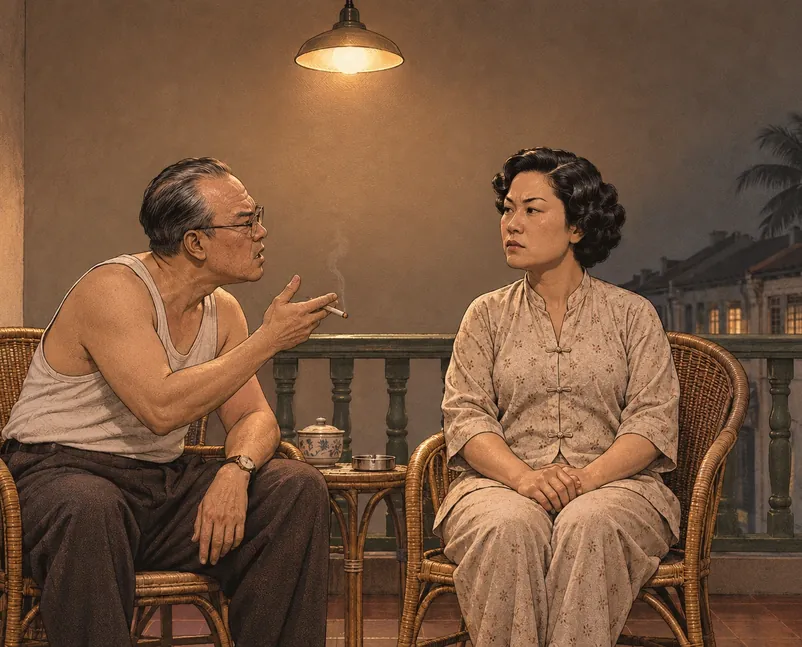
Swee Neo said nothing to her husband for a month. Then she said it all at once, one night on the upstairs veranda: that she had given way in 1952 and had been sorry ever since; that the girl kept the firm's books better than the clerk; that a girl with a Cambridge certificate could do anything, and a girl without one could keep her father's books until she married. Cheng Huat said that Mei Lin was eighteen and the talk would be all over the clan association by the end of the week. Swee Neo said that she did not care what the clan association said, which was the first time in twenty years he had heard her say so. He held out for a week, and then he gave in.
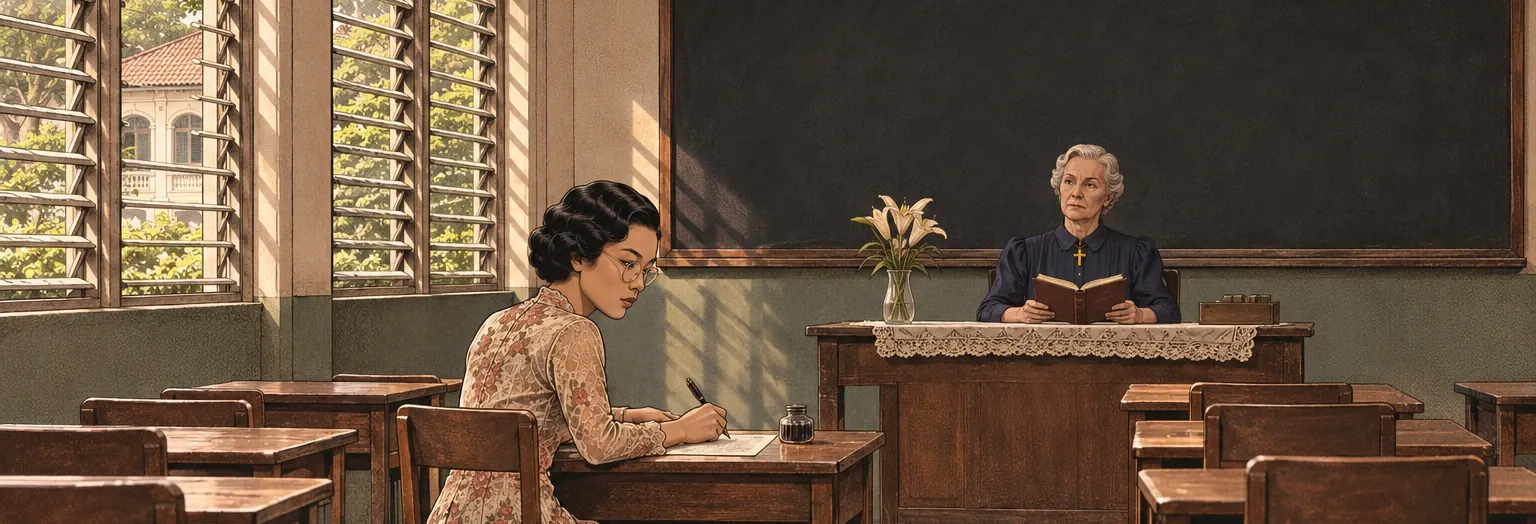
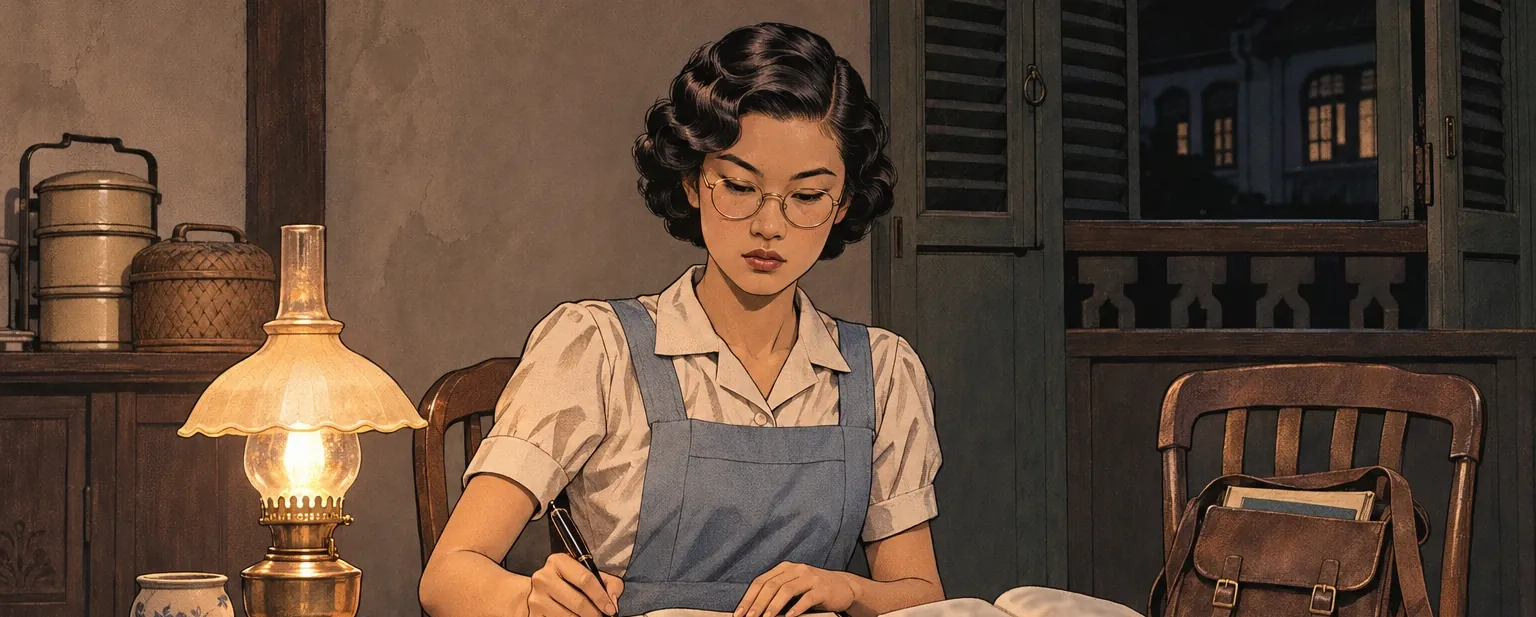
The school was the bursar's own mission school, one of the two or three best girls' schools on the island. It took her in the middle of the year into the class for late candidates, on the bursar's word and an examination that the headmistress set her herself. She was the oldest girl in the class by three years. She kept the books at home in the evenings, as before; her father would not hear of anyone else doing it.
A Match Sent Away
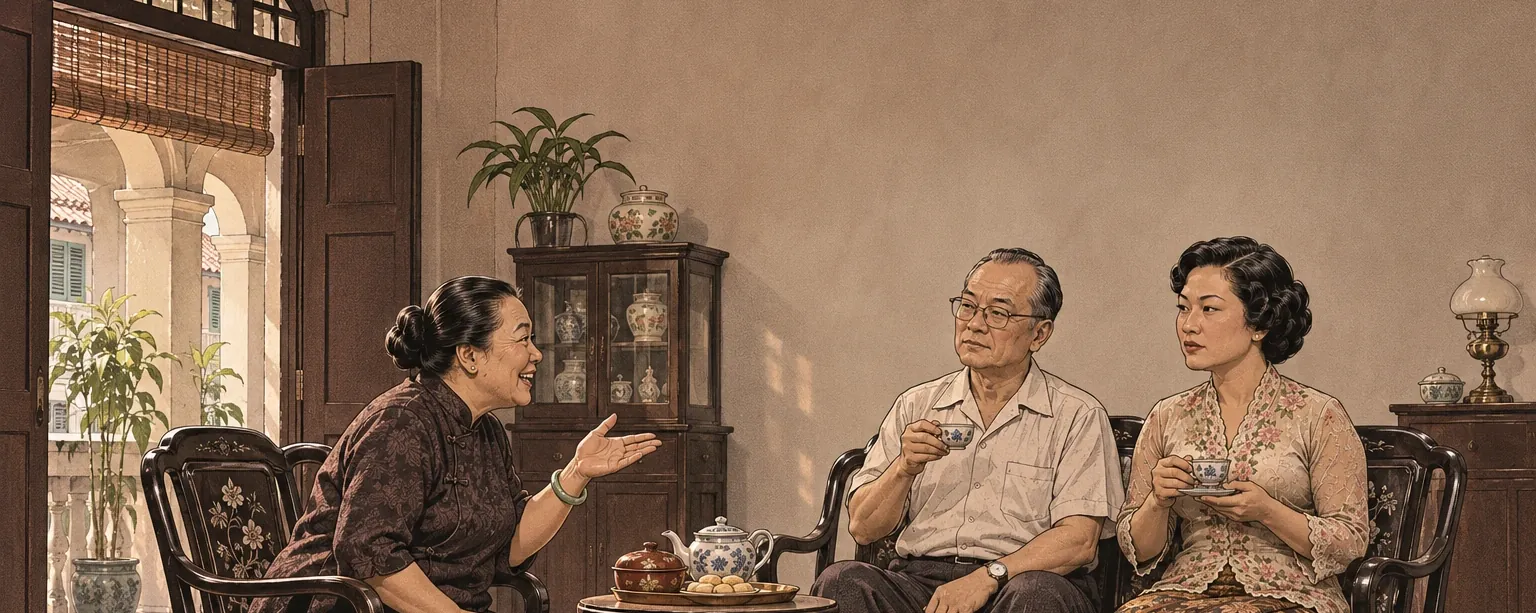
In April, before anything was decided about school, a go-between came to the house with a proposal from the family of a rice merchant in Boat Quay, whose second son was twenty-four and had been to school in Hong Kong. Her parents gave her tea and listened, and when the school was settled they sent word that their daughter was going back to her studies and they could not think of it for now. Mei Lin was not consulted either way. She had seen the son once, at a wedding, and did not mind.
Her old friends had gone, that year, into lives she could not follow. The girl who had come on Saturdays was a typist at the Harbour Board and came less and less; two of the others were married, and one had a baby. When Mei Lin went back to school she found that she did not know how to tell them, and so she did not.
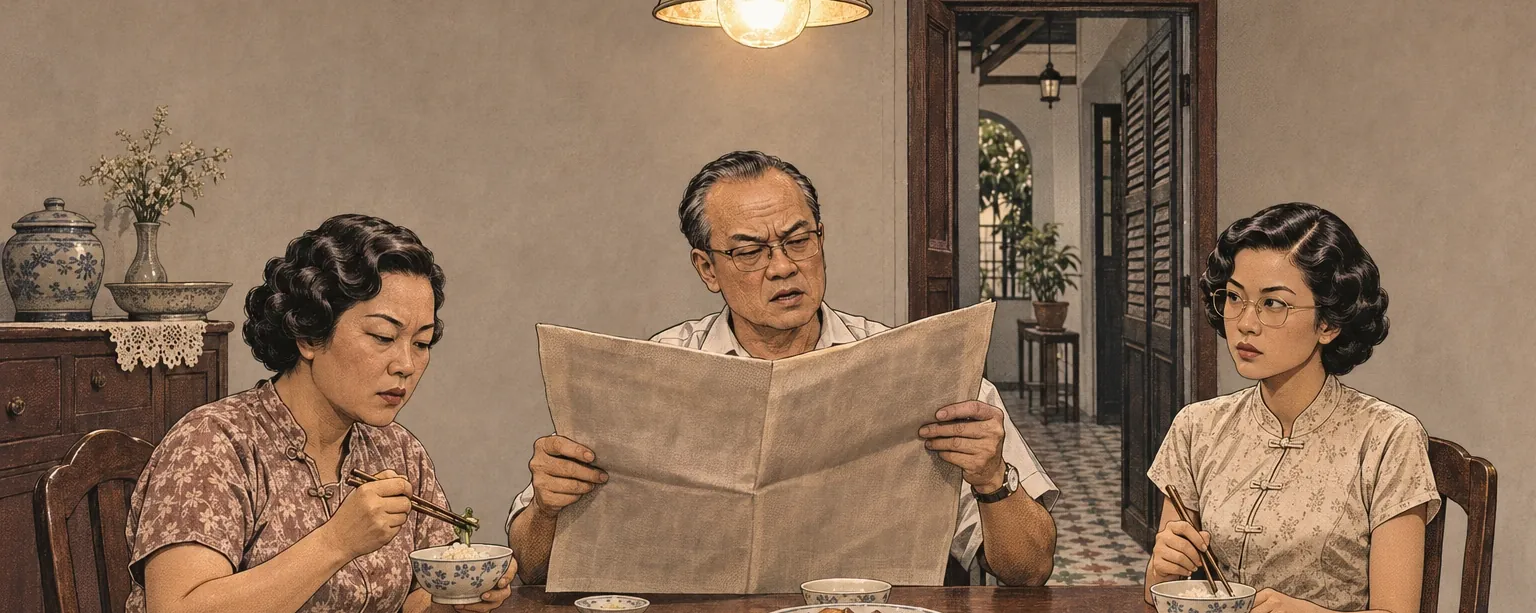
In May her father read aloud at dinner, from the newspaper, every word of the agreement that had been signed in London: self-government next year, and an Assembly elected to the last seat. He was against it, and read it twice.
The Fourth Bad Debt
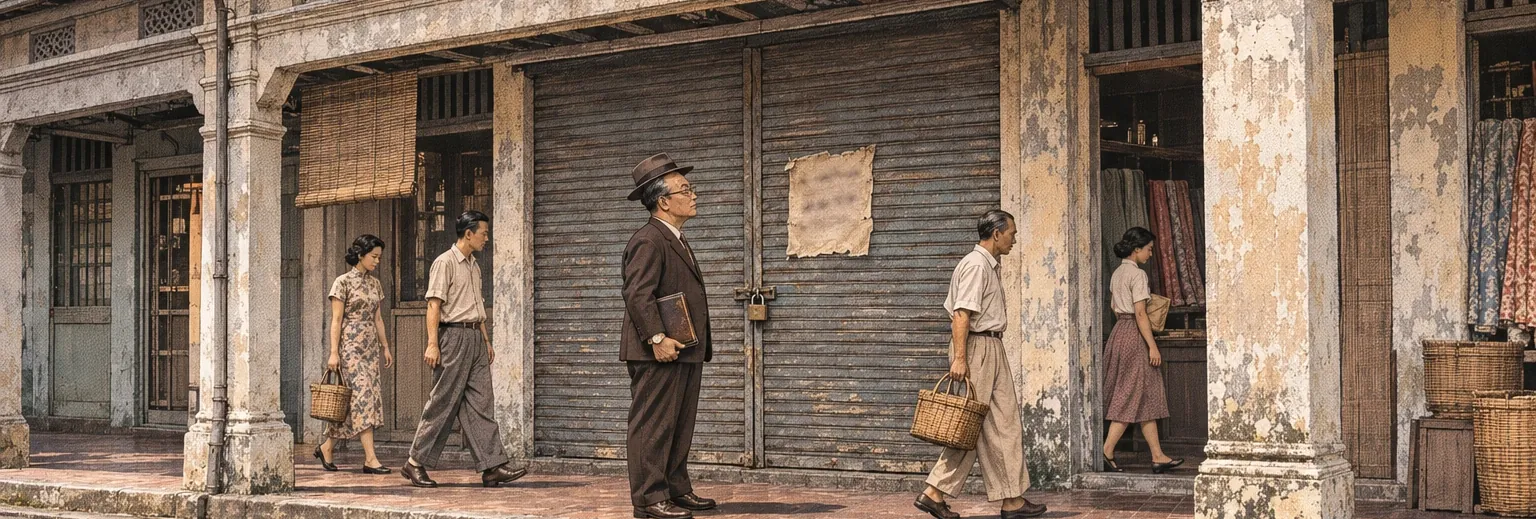
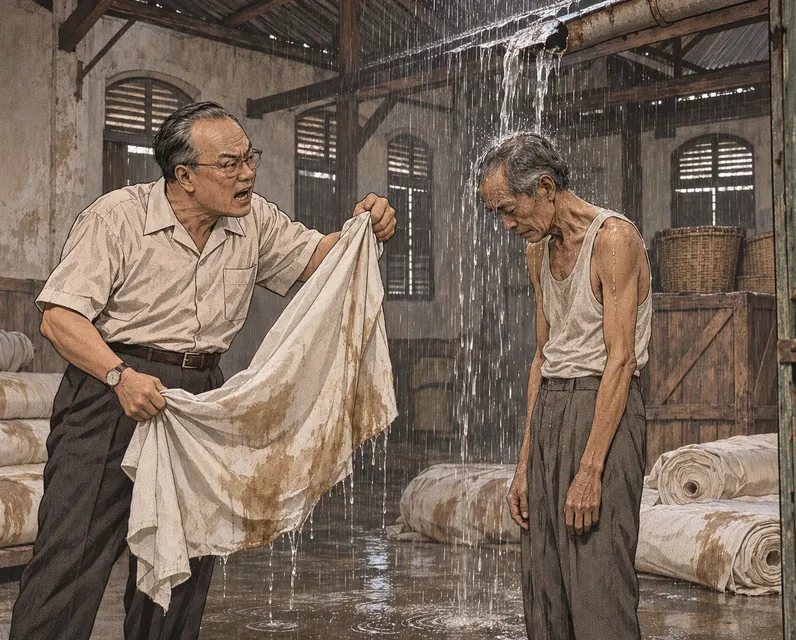
The firm grew for the third year running, and in the same year lost money twice. A draper in Geylang who had taken a full season's prints on credit shut his shop in August and could not be found, the fourth such customer since 1950. Then the rains came through a broken gutter in the godown in November and spoilt a consignment of white drill before anyone noticed. Cheng Huat took the first calmly and the second badly, and for a fortnight he was short with everyone in the house.
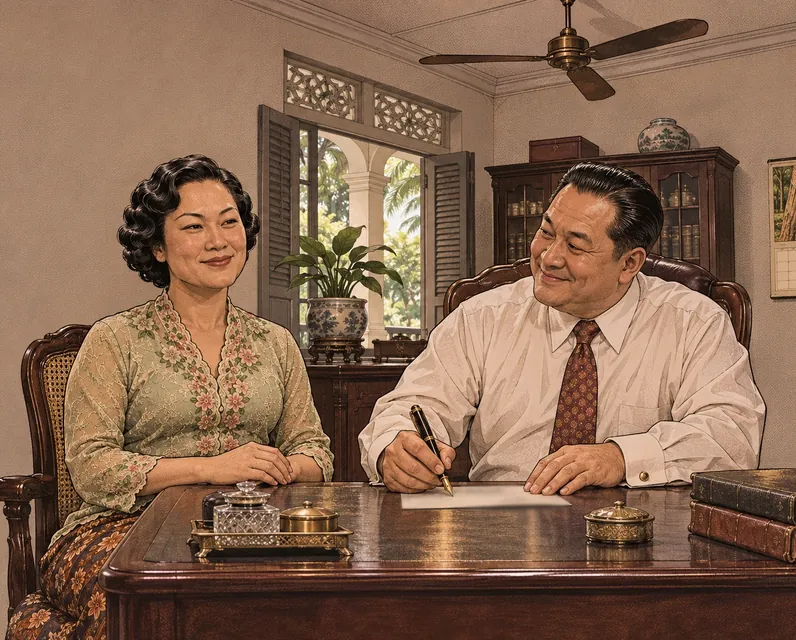
Swee Neo won a third account that year, for a hospital's linen, and when the two losses left a gap in the firm's money before the new year's orders came in, she went to her elder brother, who had done well in rubber, and borrowed from him on terms no bank would have given. She did not tell her husband until it was done.
He had his own good news. In June the piece-goods merchants' association asked him onto its committee, which was a thing his father had never been asked. He wore his good suit, which had been let out the year before.
Swee Neo slept badly that year. It began in the week the school was settled and went on into the autumn: she woke in the small hours from the old dream of the war, of the knock at the door, and lay awake until it was light. She did not say what it was, and her husband, who knew, did not ask.
On her first morning she was taller than the girl at the next desk by a head, and when the mistress asked the class to open their Shakespeare at the first act she found that she had already read it, twice, in a copy with the bursar's name inside the cover.